WA – Jack Mountain Circumnavigation (Part 5)

Links to Part 1Part 2, Part 3, Part 4

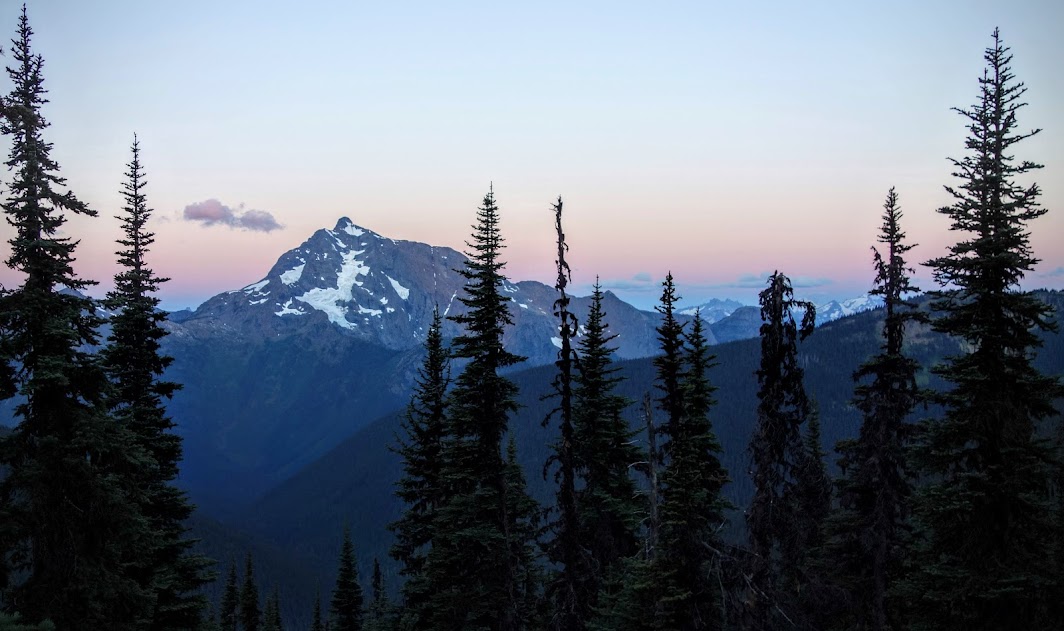
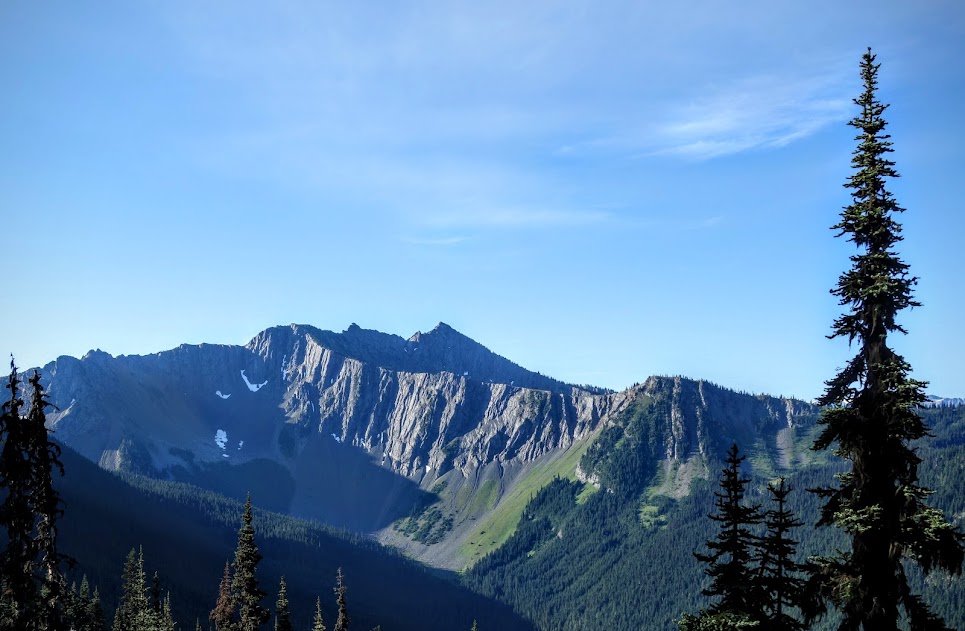
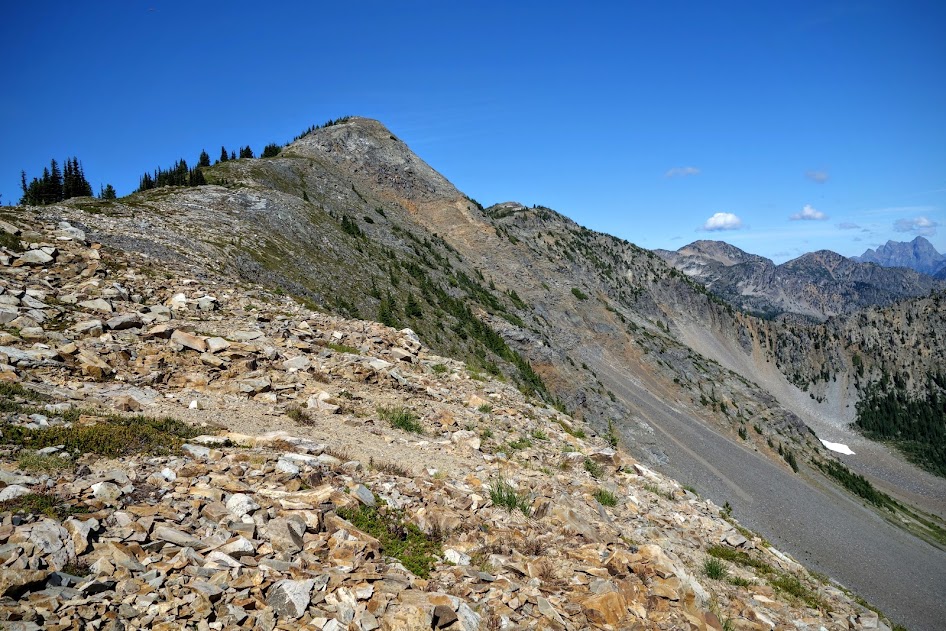
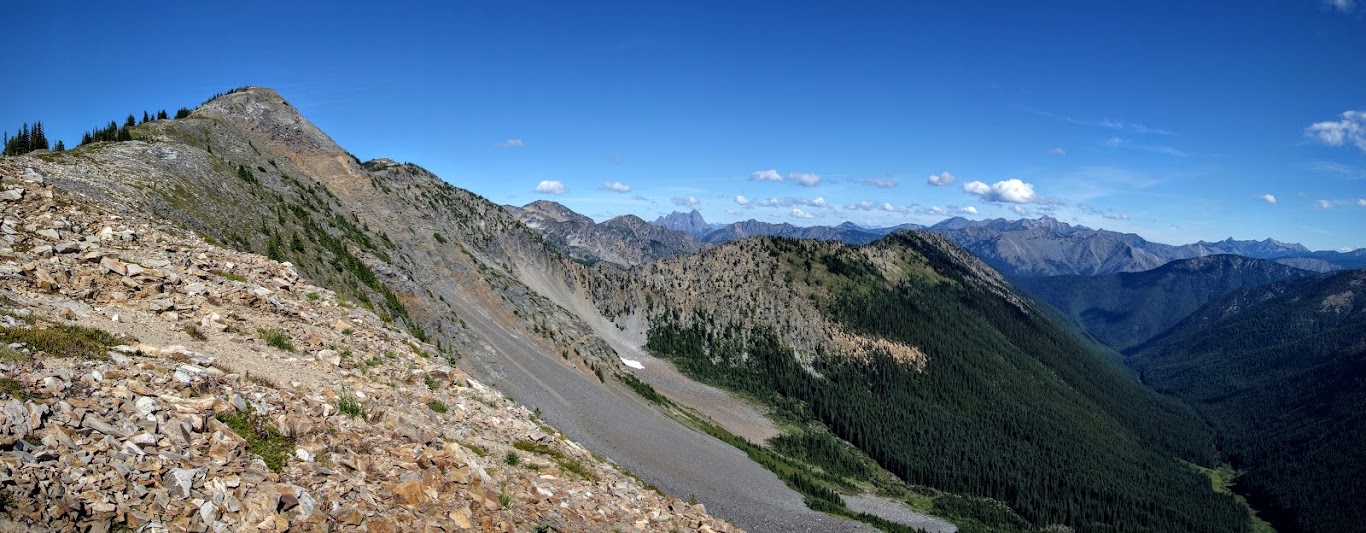
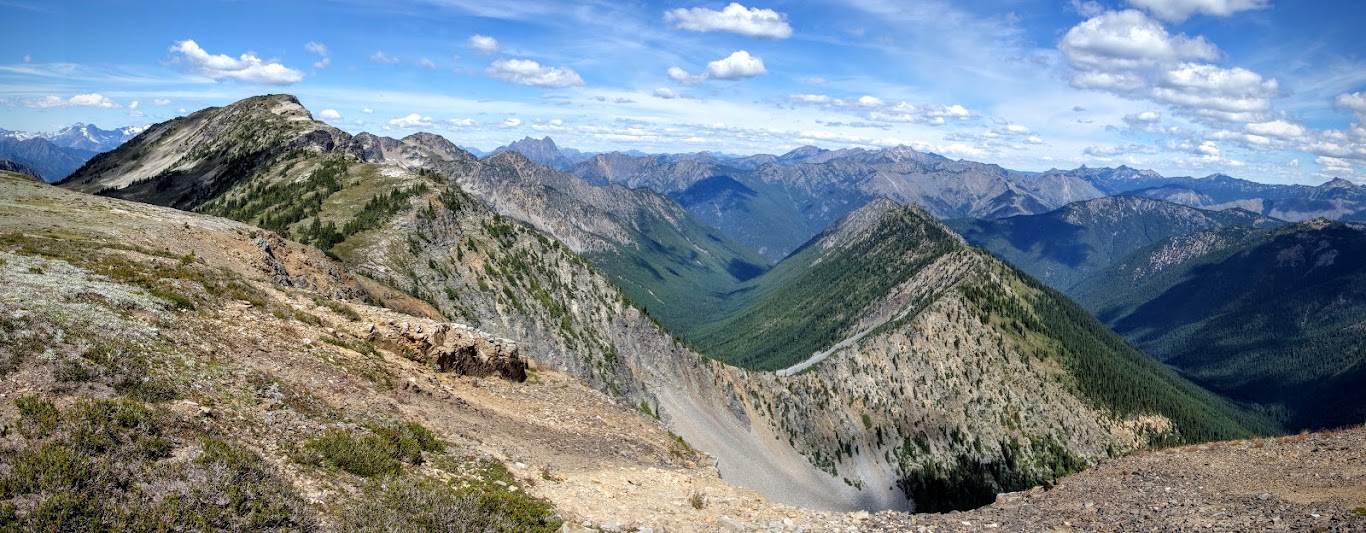
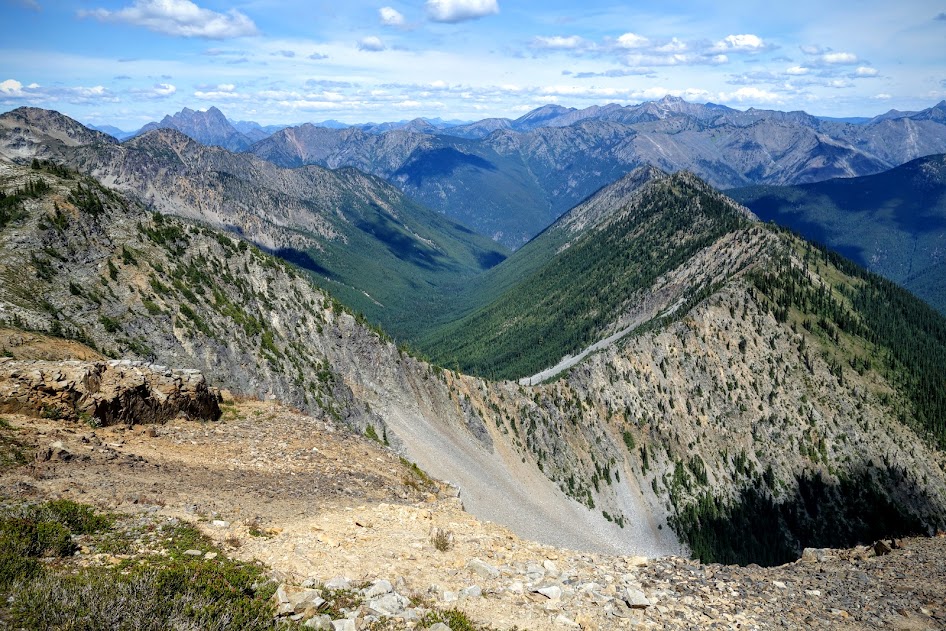
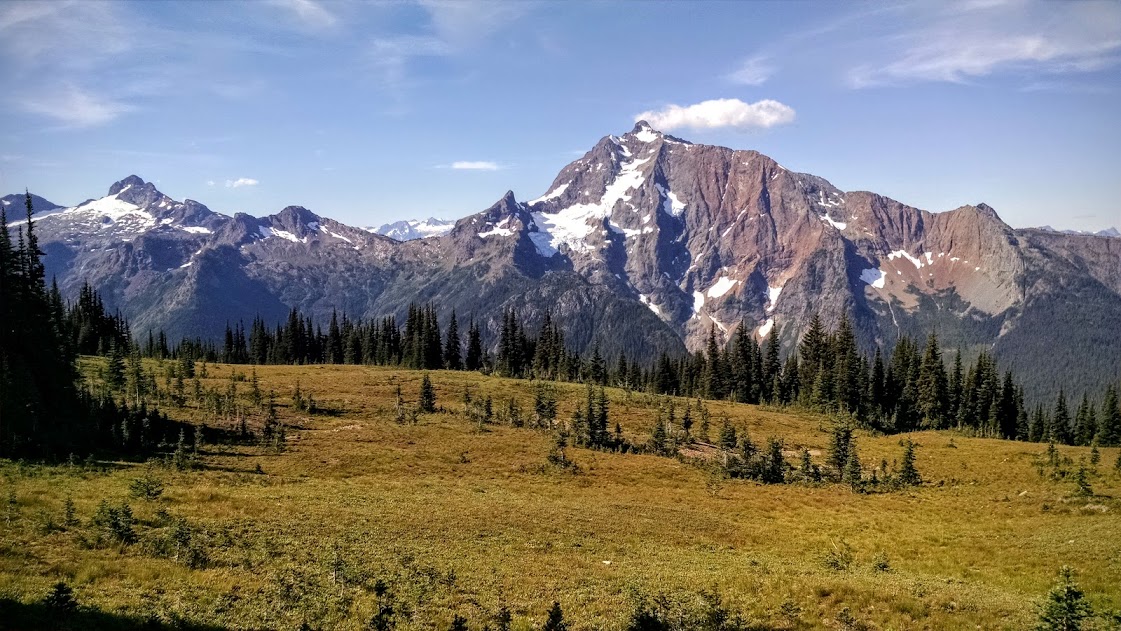
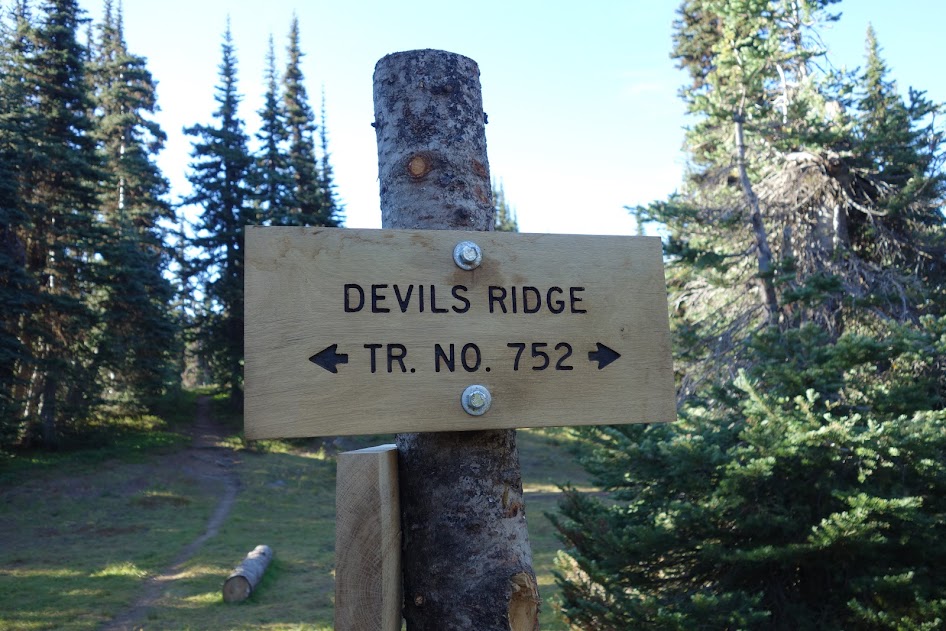
This trip was indeed not all about Jack nor the Devil. Enjoy this bonus post!

Trip Details

  • Dates Hiked: August 22-26, 2016
  • Mileage: Approximately 50 miles
  • Elevation Gain/Loss: Approximately 16,000′
  • Trail Conditions:
    • Day 1 – B+, only a few down trees and eroded trail
    • Day 2 – C, scree field and steep eroded overgrown trail near North Fork Devils Creek
    • Day 3 – A-, better signage needed for Deception Pass, Devils Pass shelter and Devils Pass spring
    • Day 4 – C, steep and dusty descending from Dry Creek Pass
    • Day 5 – B, not too many down trees nor overgrowth but could use some love
  • Solitude Factor:
    • Day 1 – two groups of 2 people each hiking out (one of the groups was day hikers)
    • Day 2 – two tents at the Crater Mountain junction, one solo hiker hiking loop in opposite direction
    • Day 3 – two at Devils Dome, two at Dry Creek Pass
    • Day 4 – too many to count, probably at least 20 going the opposite direction up to Dry Creek Pass
    • Day 5 – didn’t see anyone
  • Bugs:
    • Day 1 – no skeeters or biting flies
    • Day 2 – bees taking care of the flowers in the subalpine areas
    • Day 3 – zip except bees minding their own business
    • Day 4 – another bug-free day
    • Day 5 – zip
  • Precipitation:
    • Day 1 – a few light showers
    • Day 2 – zip, just some nice clouds
    • Day 3 – zip
    • Day 4 – another shower-free day
    • Day 5 – zip
  • Temperature:
    • Day 1 – 36 overnight low
    • Day 2 – 40 overnight low
    • Day 3 – 40 overnight low
    • Day 4 – 59 overnight low

Loop Direction:

The positives of hiking counterclockwise are the initial climb is much more friendly with better switchbacks, trail is shaded, water is plentiful, and camping is available sooner. The positives of hiking clockwise is using the ferry to cut-off 15 miles of trail, or getting the permitted section out of the way first giving you freedom of campsites the remainder of the trip.

Links

WA – Jack Mountain Circumnavigation (Part 4)

Links to Part 1Part 2, Part 3

It’s a day to say goodbye to Jack and hello to Ross. 

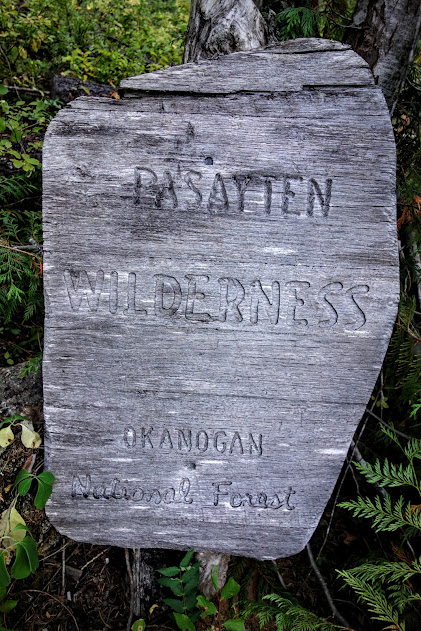
It was also time to say goodbye to Pasayten Wilderness and hello to North Cascades National Park and Ross Lake National Recreation Area. 

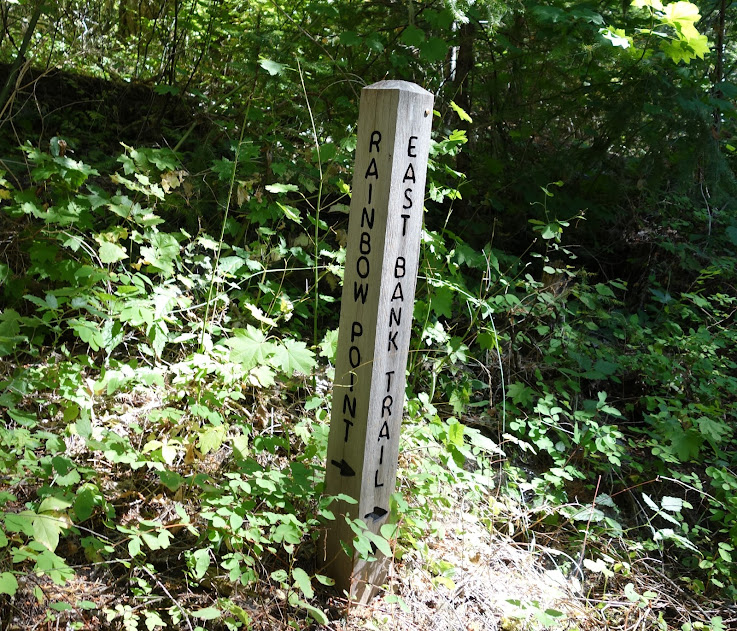
The trail paralleling Ross Lake is East Bank Trail, another stretch of Pacific Northwest Trail (PNT). Signage could have been better.

It’s important to be mindful of the rules within North Cascades NP and Ross Lake NRA. The campsites on the lake require Ross Lake NRA permits and are exclusive to boaters except for Devils Camp which is primarily for those using the ferry. There is no dispersed camping along East Bank Trail. The established sites require a North Cascades NP permit. 

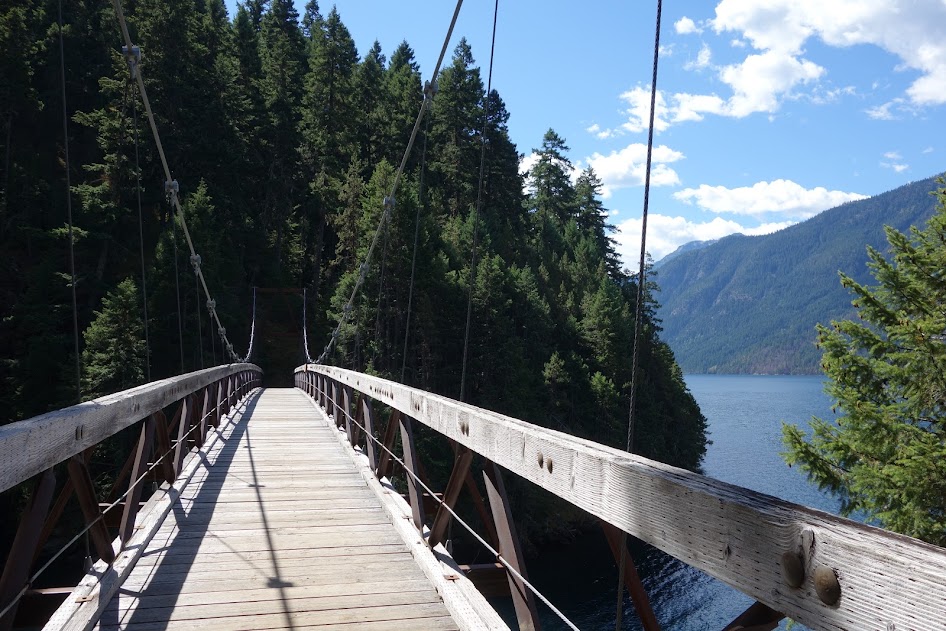
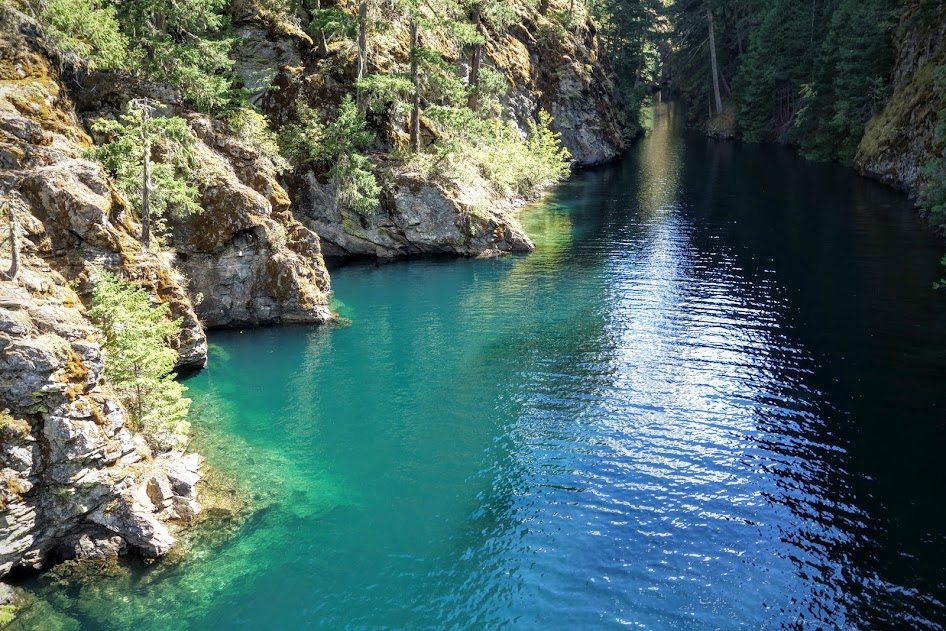
It was quite warm and dusty descending from Dry Creek Pass on the Devils Ridge Trail to Ross Lake. By the time I got to this point, I was ready to jump in. Too bad there wasn’t easy access. This gorge was especially inviting. I was jealous of the kayakers I’d watched paddle under the bridge. 

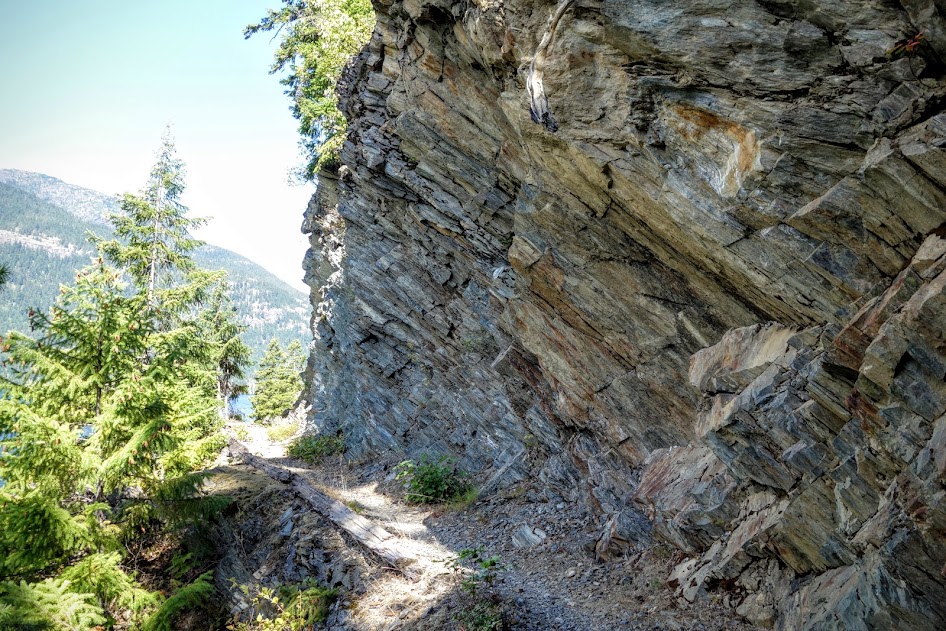
A stunning rock wall along the East Bank Trail. 

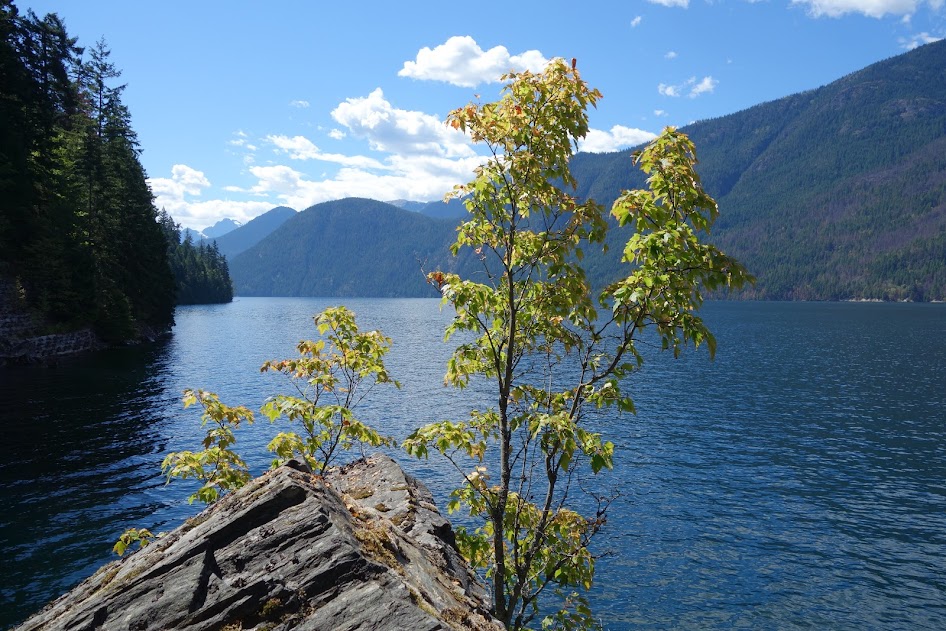
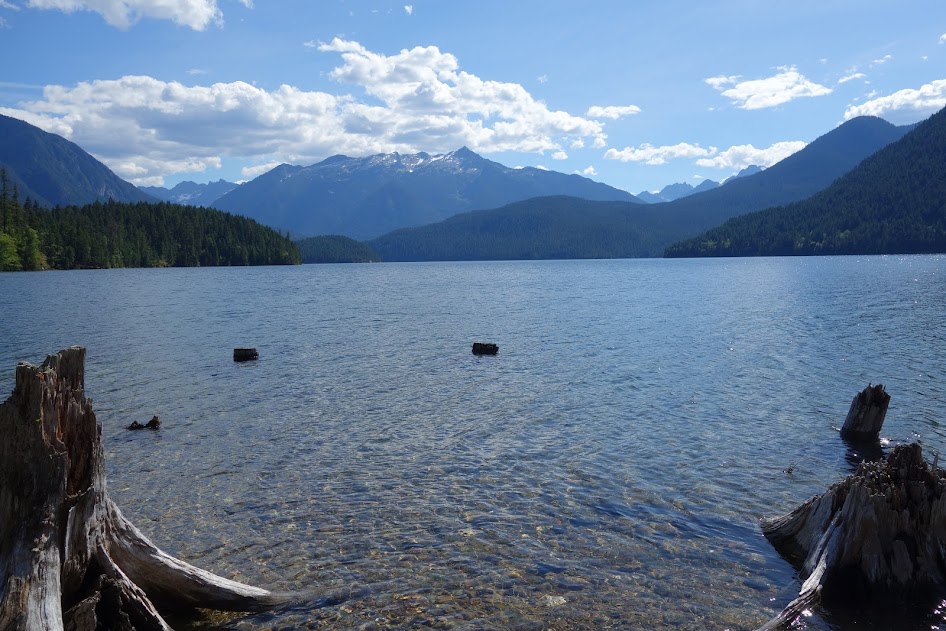
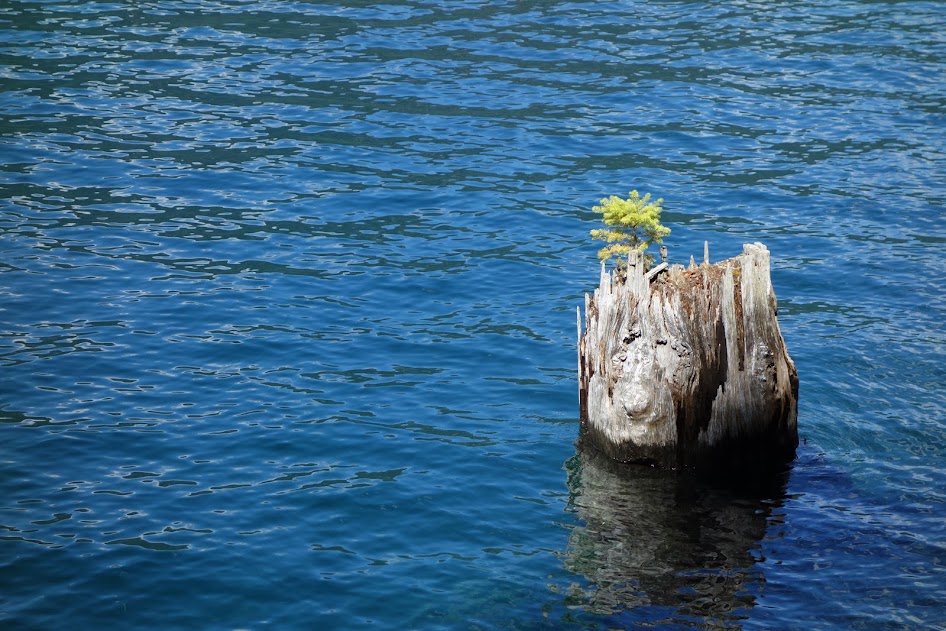
Oh Ross Lake, how you taunt me. 

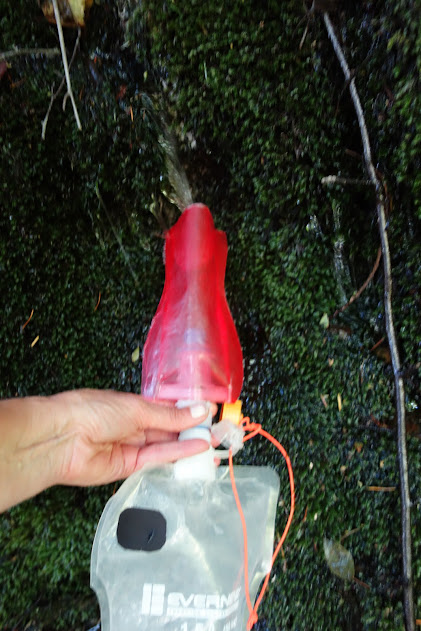
It was great to find this seeping wall since I hadn’t been able to access the lake. 

At Rainbow Point I was finally able to take a swim. 

Another surprise to me was that the East Bank Trail provided few glimpses of the lake and only two access points, Rainbow Point and Devils Creek. 

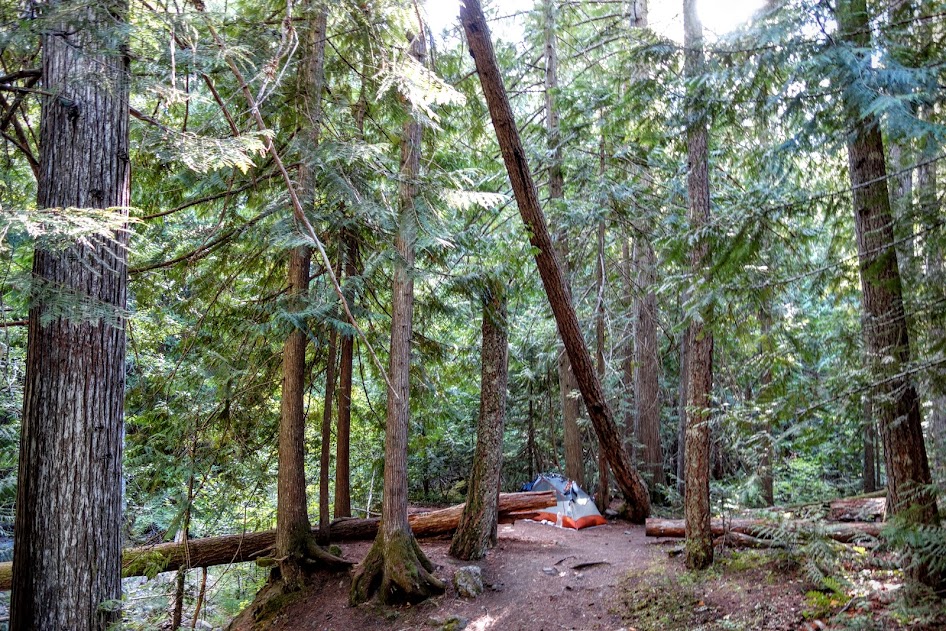
My campsite at Roland Creek was one of my all-time-favorite non-view sites. Bonus, I had the entire campground to myself.

Roland Creek was a great place to lollygag away my evening. LNT folks: no I didn’t make the cairns.

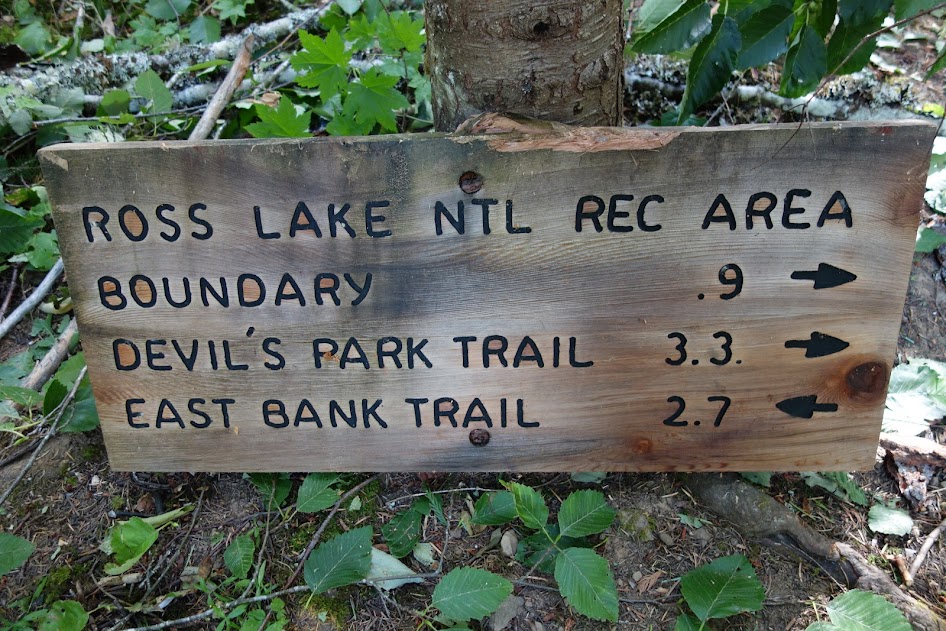
To complete the loop, I hiked past the East Bank Trailhead along Ruby Creek. According to my map, this is part of the East Bank Trail, but there was no signage and in fact a tree had recently crashed taking this sign with it. I resurrected the sign and notified the ranger station.

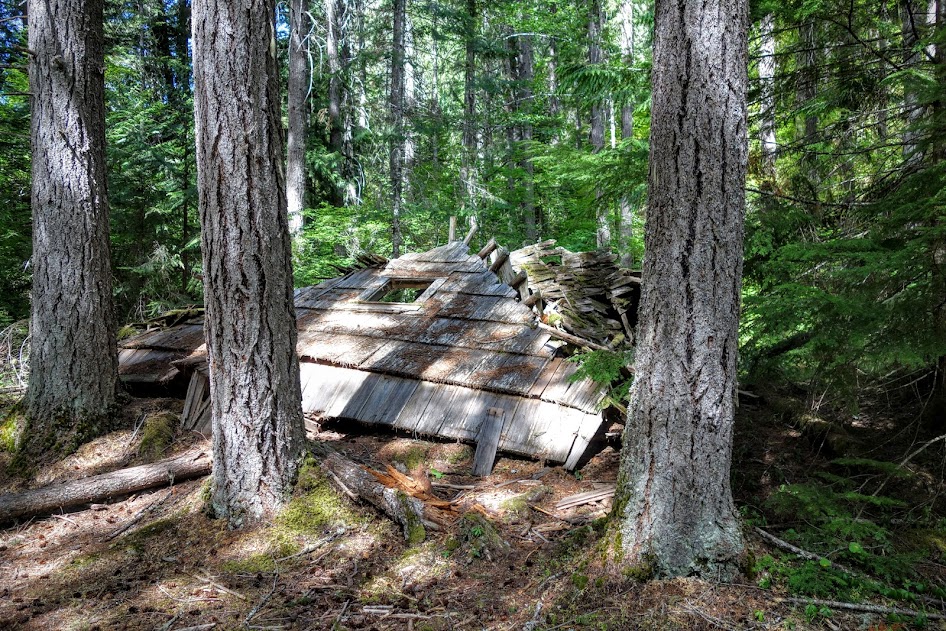
Soon this cabin will be absorbed by the woods. 

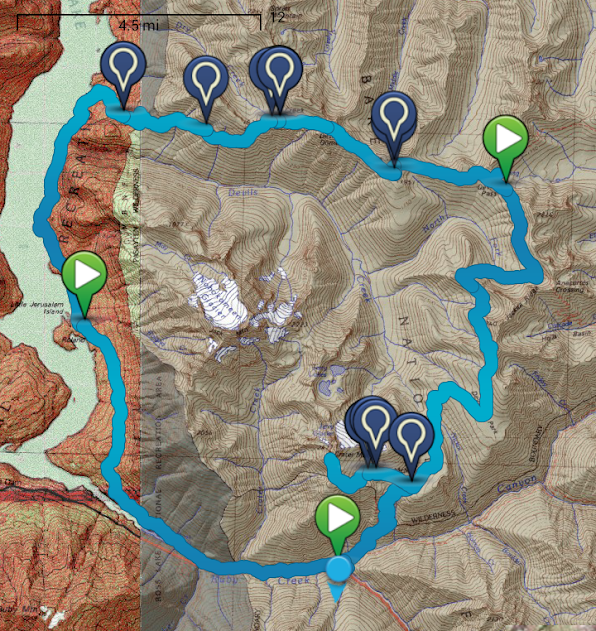
My version of Jack’s aka Devils Dome Loop. 

to be continued . . .

Trip Details

  • Dates Hiked: August 22-26, 2016
  • Mileage: Approximately 50 miles
  • Elevation Gain/Loss: Approximately 16,000′
  • Trail Conditions:
    • Day 1 – B+, only a few down trees and eroded trail
    • Day 2 – C, scree field and steep eroded overgrown trail near North Fork Devils Creek
    • Day 3 – A-, better signage needed for Deception Pass, Devils Pass shelter and Devils Pass spring
    • Day 4 – C, steep and dusty descending from Dry Creek Pass
    • Day 5 – B, not too many down trees nor overgrowth but could use some love
  • Solitude Factor:
    • Day 1 – two groups of 2 people each hiking out (one of the groups was day hikers)
    • Day 2 – two tents at the Crater Mountain junction, one solo hiker hiking loop in opposite direction
    • Day 3 – two at Devils Dome, two at Dry Creek Pass
    • Day 4 – too many to count, probably at least 20 going the opposite direction up to Dry Creek Pass
    • Day 5 – didn’t see anyone
  • Bugs:
    • Day 1 – no skeeters or biting flies
    • Day 2 – bees taking care of the flowers in the subalpine areas
    • Day 3 – zip except bees minding their own business
    • Day 4 – another bug-free day
    • Day 5 – zip
  • Precipitation:
    • Day 1 – a few light showers
    • Day 2 – zip, just some nice clouds
    • Day 3 – zip
    • Day 4 – another shower-free day
    • Day 5 – zip
  • Temperature:
    • Day 1 – 36 overnight low
    • Day 2 – 40 overnight low
    • Day 3 – 40 overnight low
    • Day 4 – 59 overnight low

Loop Direction:

The positives of hiking counterclockwise are the initial climb is much more friendly with better switchbacks, trail is shaded, water is plentiful, and camping is available sooner. The positives of hiking clockwise is using the ferry to cut-off 15 miles of trail, or getting the permitted section out of the way first giving you freedom of campsites the remainder of the trip.

Links

WA – Jack Mountain Circumnavigation (Part 3)

Link to Part 1 and Part 2

Good morning Jack! Told you this trip was all about Jack NOT the Devil.

Okay, maybe a little about the Devil. By the way, this stretch of trail is part of the Pacific Northwest Trail (PNT).

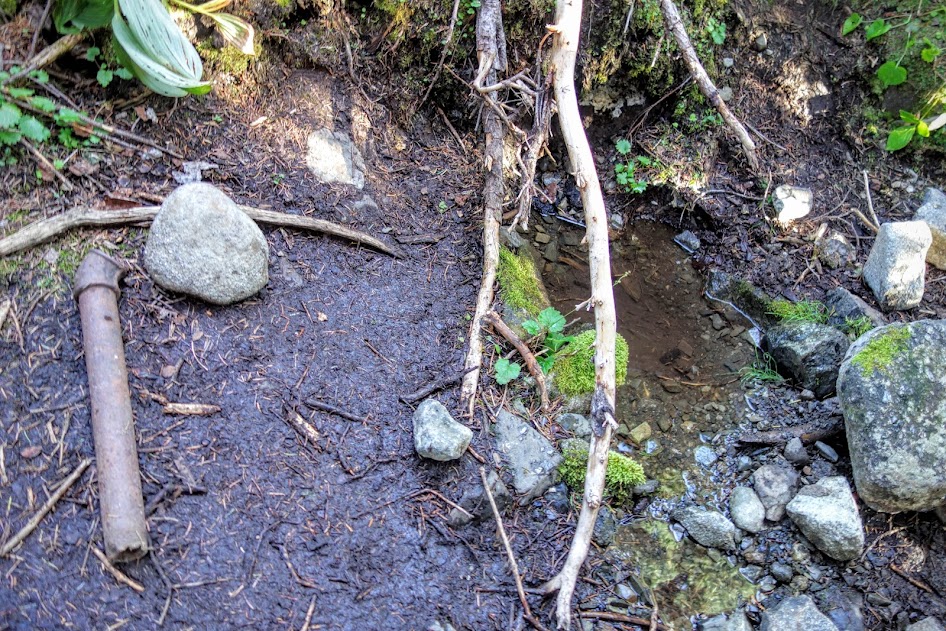
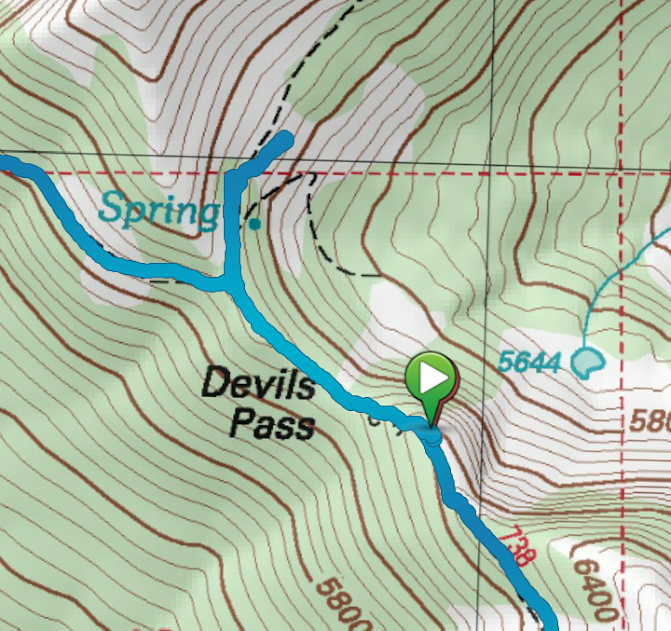
There’s a spring to the northeast of Devils Pass. It’s not the easiest to find nor is the water all that accessible nor appetizing. Looks like the devil had his hand in breaking the plumbing and leaving a small algae filled puddle for your dipping pleasure. As I reviewed the guidebook in prep for this post, I think there are two springs as it mentions one near the Devils Pass shelter (I didn’t find that either but wasn’t looking).

There were three trails heading generally northeast from the junction (none matched my digital map). I’m guessing the higher one was the Deception Pass trail, possibly the middle one went to the shelter. I took the lower one which had a spur to this spring (end point on my track), and may have continued on to the shelter. 

Goodbye Jackita Ridge (once again the sun wasn’t cooperating for optimal photos).

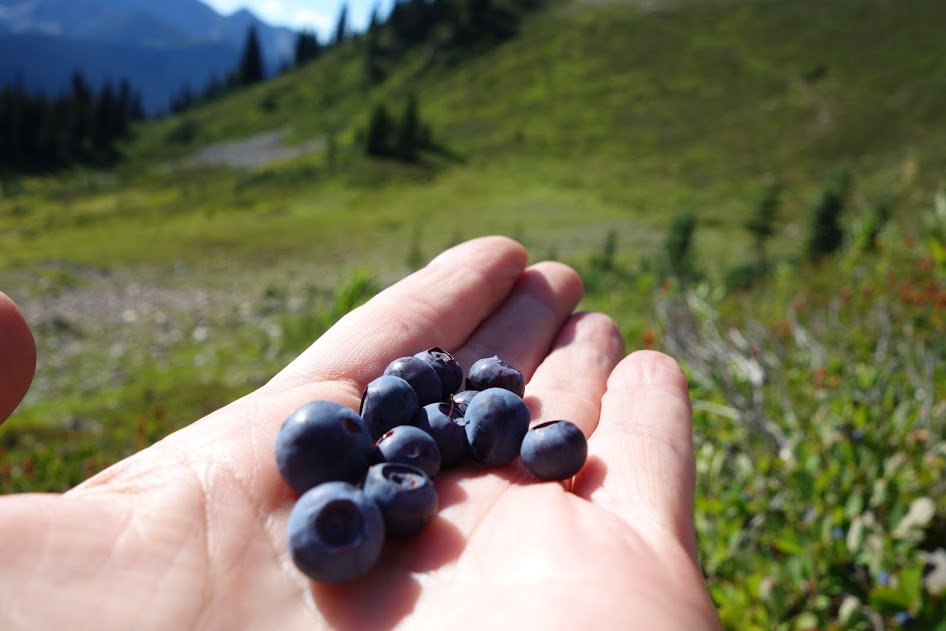
One of my favorite memories of this trail was this glacial cirque where I saw two bears. I sat on the trail plucking and blissfully eating blueberries while listening to the marmot and pika, and hoping the bears would return. Who needs TV when you have this?

Then it was onward to Devils Dome.

Views from the top was 360 spectacular! 

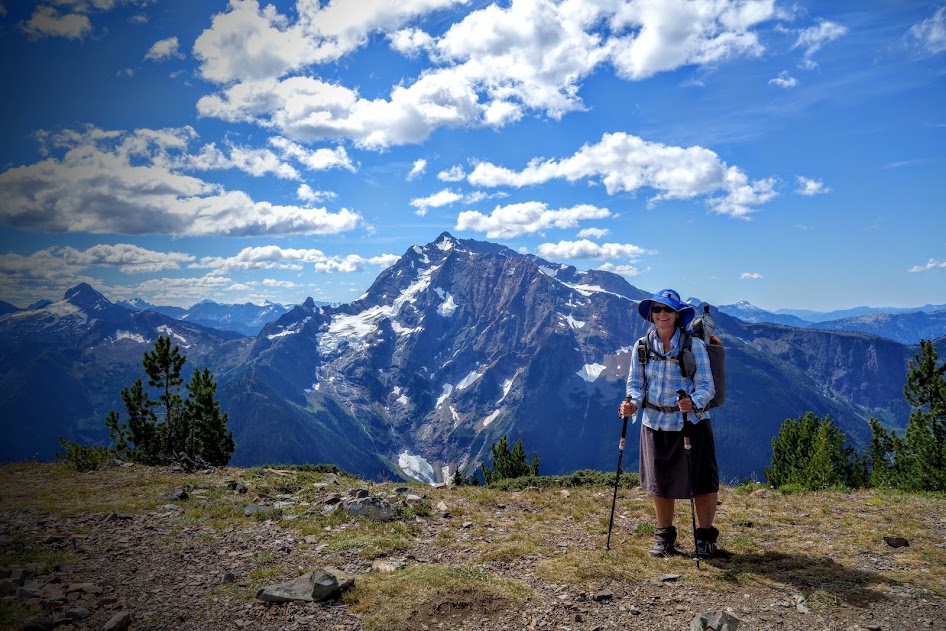
Although the light wasn’t optimal, from the top of Devils Dome I had a front row seat of Jack. I met a father and daughter duo who’d claimed their campsite on top before noon. The sunset and sunrise opportunities would have been superb, but with absolutely no protection from the wind or rain, it was a risky choice. 

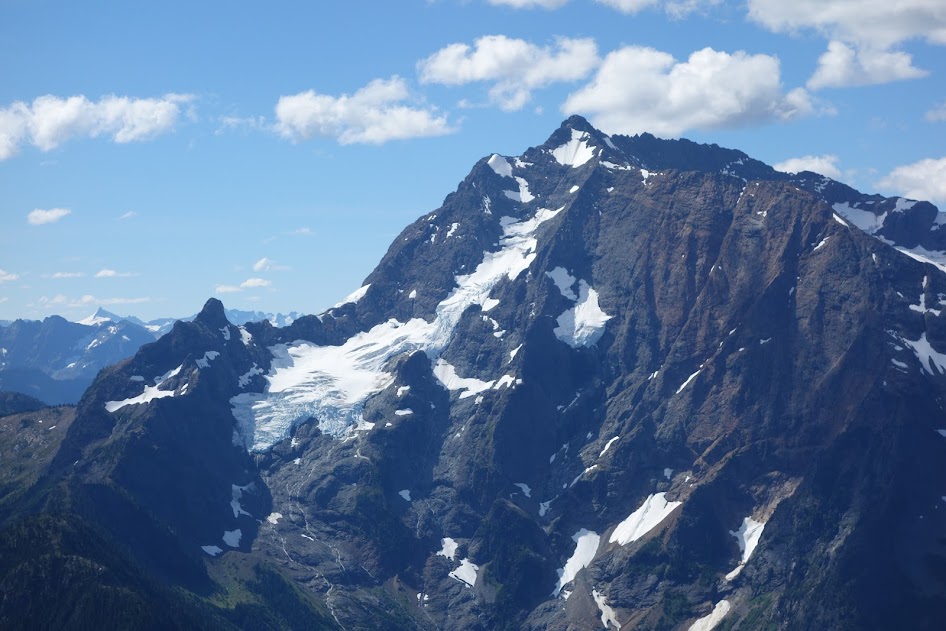
Nohokomeen Glacier on Jack Mountain. I believe that’s Mt Baker in the background.

By 3:30, clouds were building and wind was blowing. If I was camped on Devils Dome, I would have most likely relocated. Lucky for my friends, it ended up being an almost perfect night and I was a bit jealous of their views.

to be continued . . .

Trip Details

  • Dates Hiked: August 22-26, 2016
  • Mileage: Approximately 50 miles
  • Elevation Gain/Loss: Approximately 16,000′
  • Trail Conditions:
    • Day 1 – B+, only a few down trees and eroded trail
    • Day 2 – C, scree field and steep eroded overgrown trail near North Fork Devils Creek
    • Day 3 – A-, better signage needed for Deception Pass, Devils Pass shelter and Devils Pass spring
    • Day 4 – C, steep and dusty descending from Dry Creek Pass
    • Day 5 – B, not too many down trees nor overgrowth but could use some love
  • Solitude Factor:
    • Day 1 – two groups of 2 people each hiking out (one of the groups was day hikers)
    • Day 2 – two tents at the Crater Mountain junction, one solo hiker hiking loop in opposite direction
    • Day 3 – two at Devils Dome, two at Dry Creek Pass
    • Day 4 – too many to count, probably at least 20 going the opposite direction up to Dry Creek Pass
    • Day 5 – didn’t see anyone
  • Bugs:
    • Day 1 – no skeeters or biting flies
    • Day 2 – bees taking care of the flowers in the subalpine areas
    • Day 3 – zip except bees minding their own business
    • Day 4 – another bug-free day
    • Day 5 – zip
  • Precipitation:
    • Day 1 – a few light showers
    • Day 2 – zip, just some nice clouds
    • Day 3 – zip
    • Day 4 – another shower-free day
    • Day 5 – zip
  • Temperature:
    • Day 1 – 36 overnight low
    • Day 2 – 40 overnight low
    • Day 3 – 40 overnight low
    • Day 4 – 59 overnight low

Loop Direction:

The positives of hiking counterclockwise are the initial climb is much more friendly with better switchbacks, trail is shaded, water is plentiful, and camping is available sooner. The positives of hiking clockwise is using the ferry to cut-off 15 miles of trail, or getting the permitted section out of the way first giving you freedom of campsites the remainder of the trip.

Links

WA – Jack Mountain Circumnavigation (Part 2)

Link to Part 1

Goodbye Crater Mountain, hello Jack Mountain. 

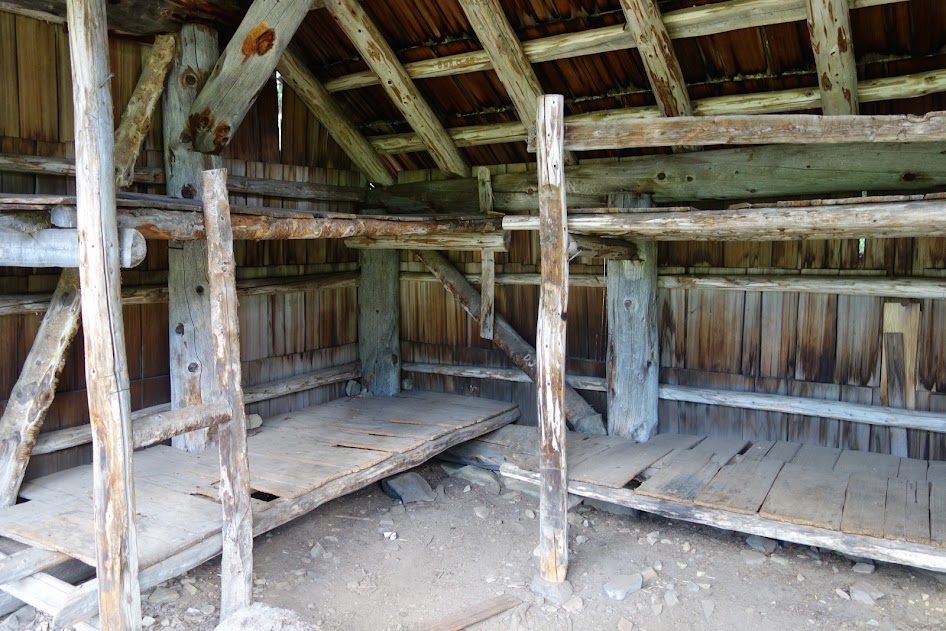
The shelter at Devils Park might not meet AAA standards.

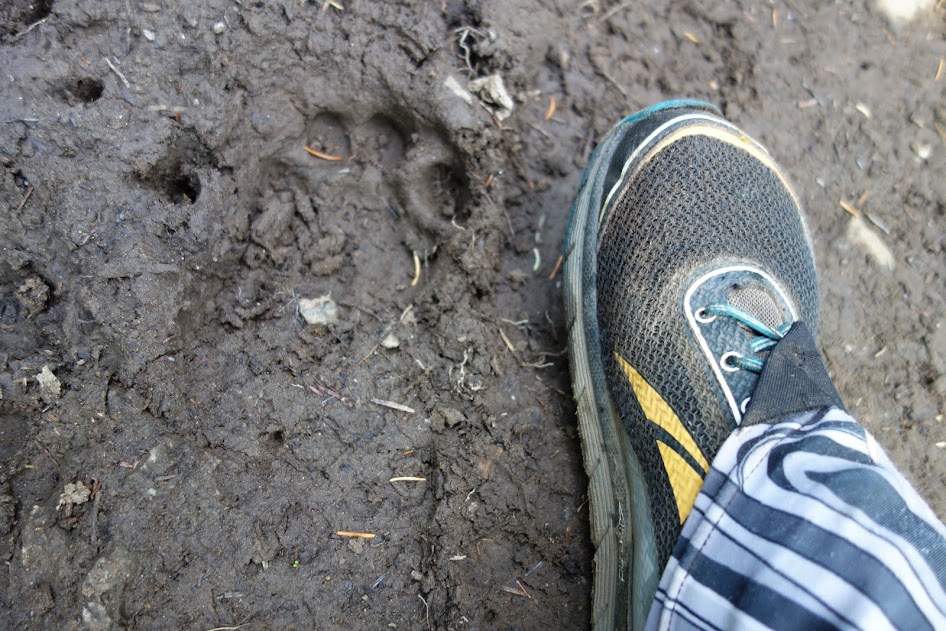
Who walks here? 

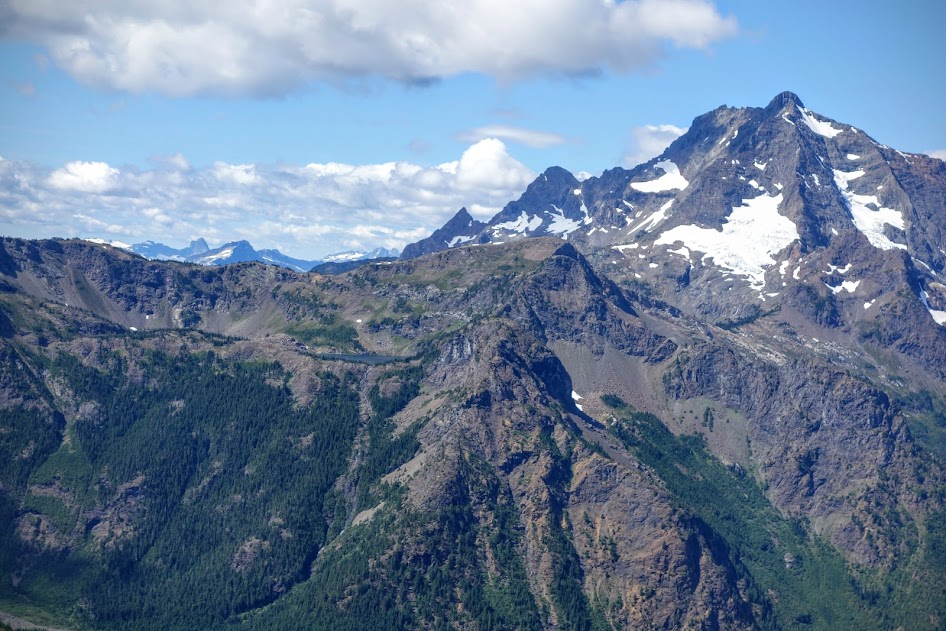
Jerry Glacier on Crater Mountain and Nohokomeen Glacier on Jack Mountain. 

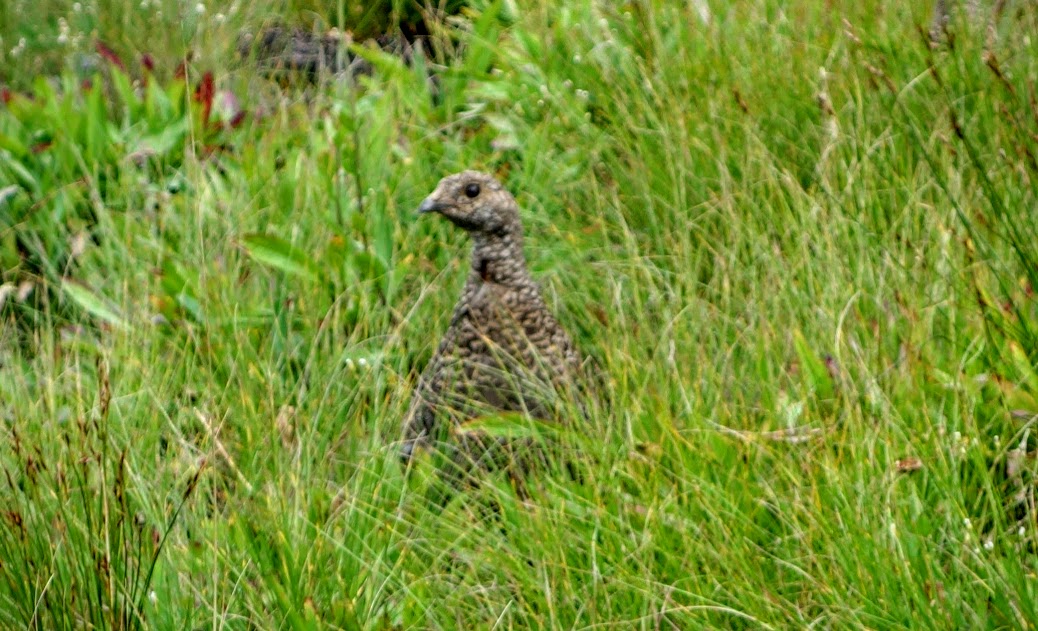
Guess who was surprised to see me? Ms. Grouse! 

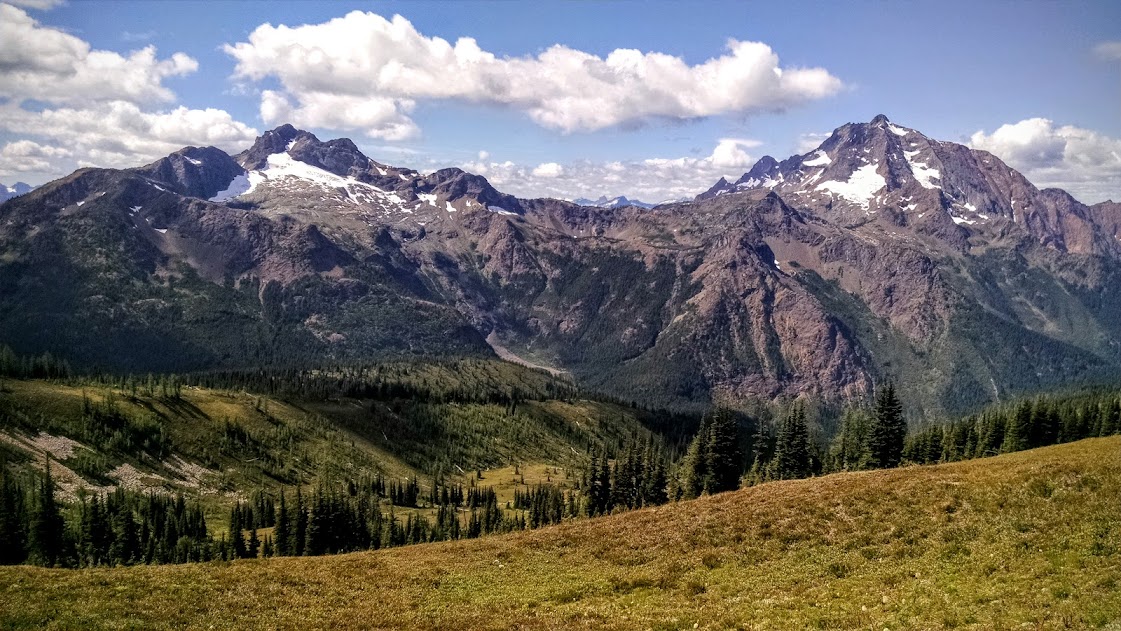
Jerry Lakes on Crater Mountain to the left, Jack Mountain to the right.

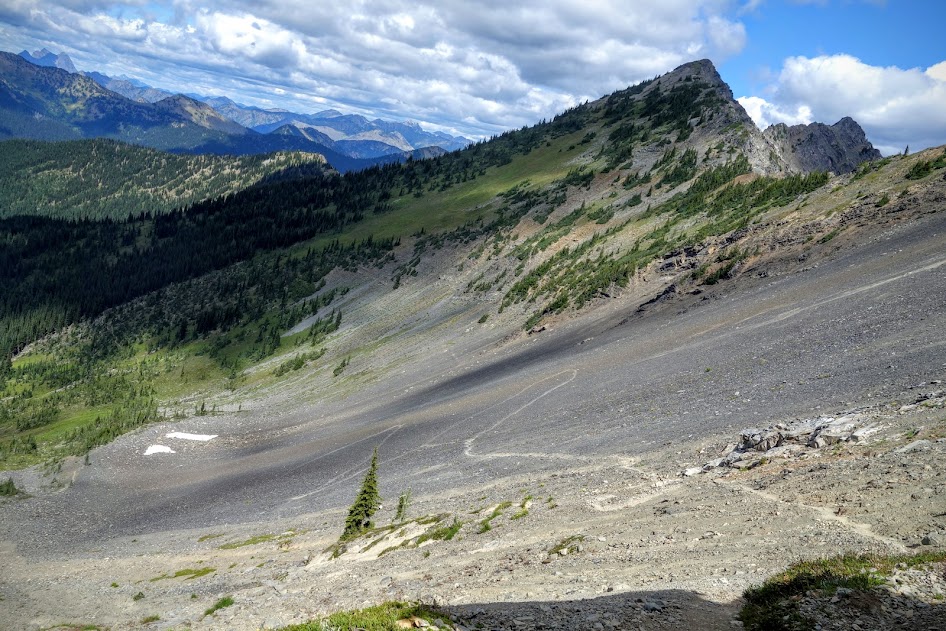
Oh how I dislike scree. This was the worst section of trail. Slow and steady as she goes. 

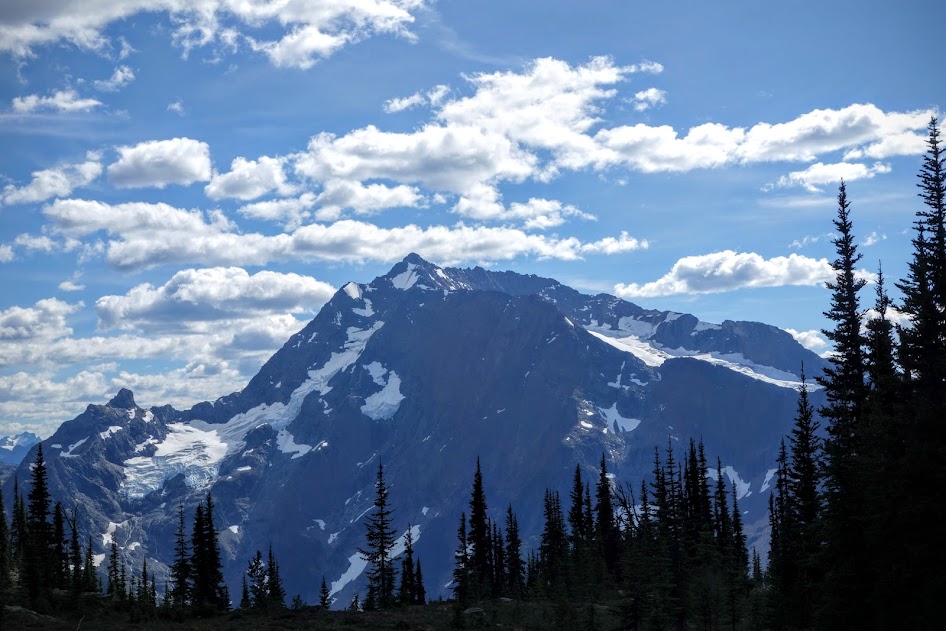
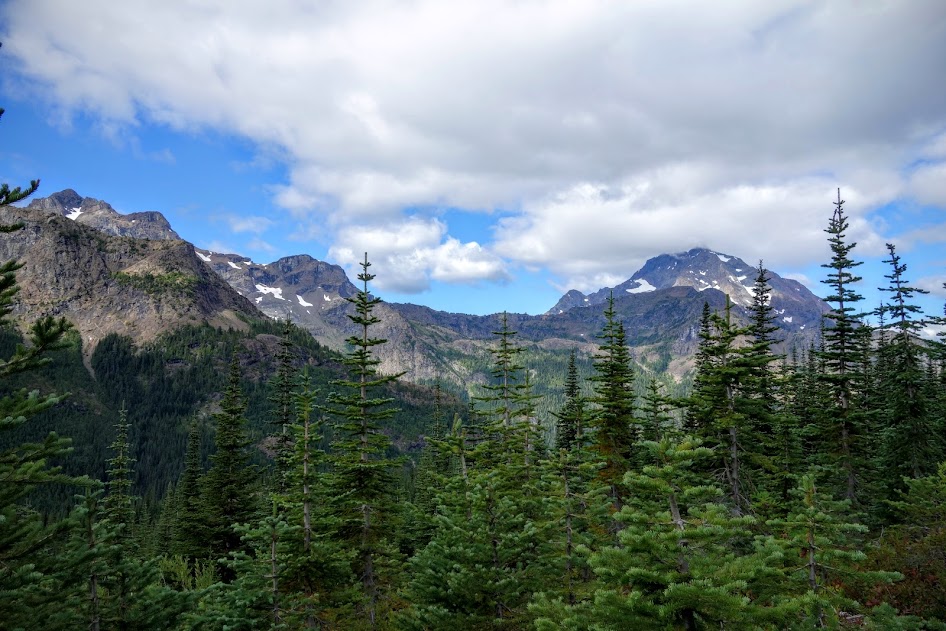
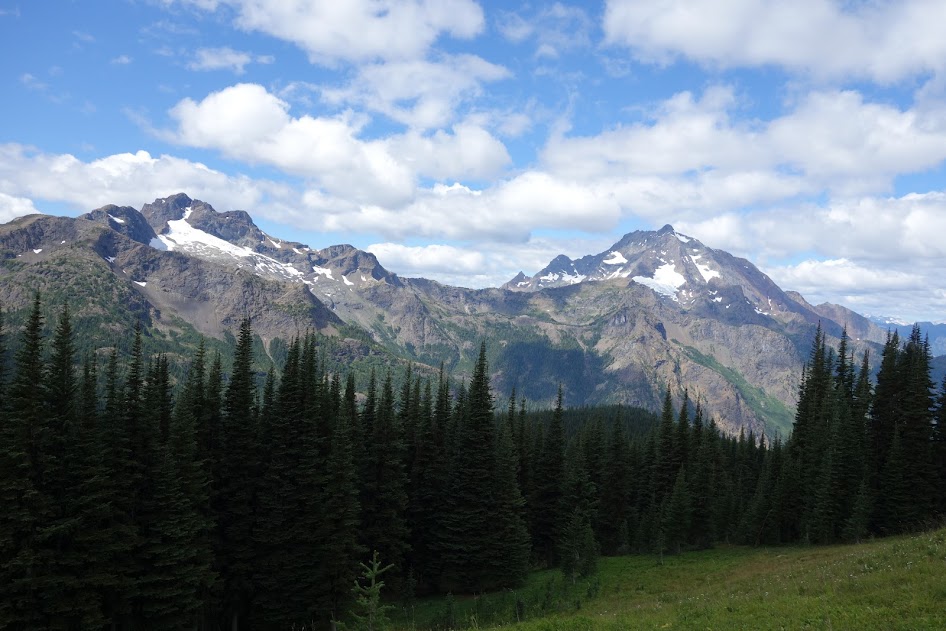
Now you know why I call this the Jack Mountain vs Devils Dome loop. Jack is visible 75% of the loop while the Devil is visible maybe 20%. 

Jackita Ridge was spectacular. Sadly I was there at the wrong time of day to capture the best photos. Crossing through a sub-alpine zone to reach North Fork Devils Creek was not exactly fun as bushwhacking through very steep, eroded, overgrown trail was required. I missed the trail junction to Anacortes Crossing, which I read was worth a sidetrip.

to be continued . . .

Trip Details

  • Dates Hiked: August 22-26, 2016
  • Mileage: Approximately 50 miles
  • Elevation Gain/Loss: Approximately 16,000′
  • Trail Conditions:
    • Day 1 – B+, only a few down trees and eroded trail
    • Day 2 – C, scree field and steep eroded overgrown trail near North Fork Devils Creek
    • Day 3 – A-, better signage needed for Deception Pass, Devils Pass shelter and Devils Pass spring
    • Day 4 – C, steep and dusty descending from Dry Creek Pass
    • Day 5 – B, not too many down trees nor overgrowth but could use some love
  • Solitude Factor:
    • Day 1 – two groups of 2 people each hiking out (one of the groups was day hikers)
    • Day 2 – two tents at the Crater Mountain junction, one solo hiker hiking loop in opposite direction
    • Day 3 – two at Devils Dome, two at Dry Creek Pass
    • Day 4 – too many to count, probably at least 20 going the opposite direction up to Dry Creek Pass
    • Day 5 – didn’t see anyone
  • Bugs:
    • Day 1 – no skeeters or biting flies
    • Day 2 – bees taking care of the flowers in the subalpine areas
    • Day 3 – zip except bees minding their own business
    • Day 4 – another bug-free day
    • Day 5 – zip
  • Precipitation:
    • Day 1 – a few light showers
    • Day 2 – zip, just some nice clouds
    • Day 3 – zip
    • Day 4 – another shower-free day
    • Day 5 – zip
  • Temperature:
    • Day 1 – 36 overnight low
    • Day 2 – 40 overnight low
    • Day 3 – 40 overnight low
    • Day 4 – 59 overnight low

Loop Direction:

The positives of hiking counterclockwise are the initial climb is much more friendly with better switchbacks, trail is shaded, water is plentiful, and camping is available sooner. The positives of hiking clockwise is using the ferry to cut-off 15 miles of trail, or getting the permitted section out of the way first giving you freedom of campsites the remainder of the trip.

Links

WA – Jack Mountain Circumnavigation (Part 1)

This past April marked my inaugural drive on Highway 20 through the North Cascades. Those mountains looked like my kind of playground. I knew I’d return. 
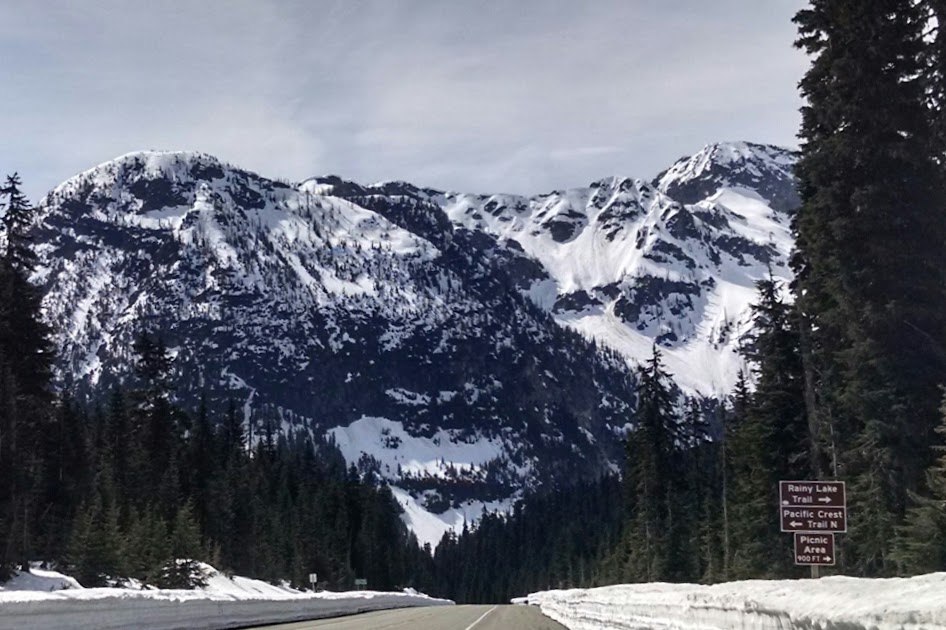
So here I was driving west, whispering I’ll be back to the PCT crossing at Rainy Pass as I continued onward to the Marblemount Ranger Station to hatch a plan. My request was views, ridges, and alpine terrain minus crowds of August backpackers. Ranger Anton recommended the Devils Dome Loop. Armed with maps and trail resources it was adventure time! 
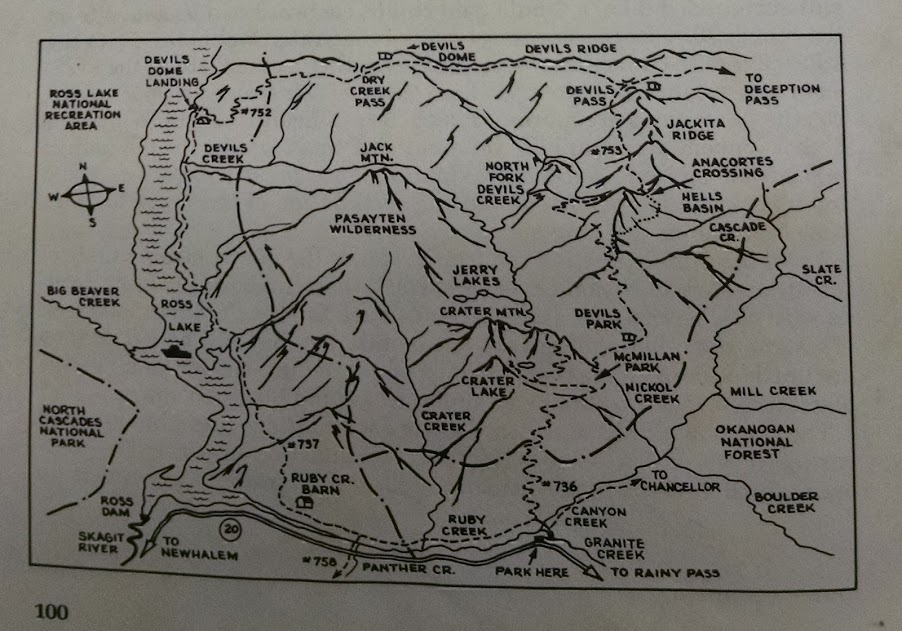
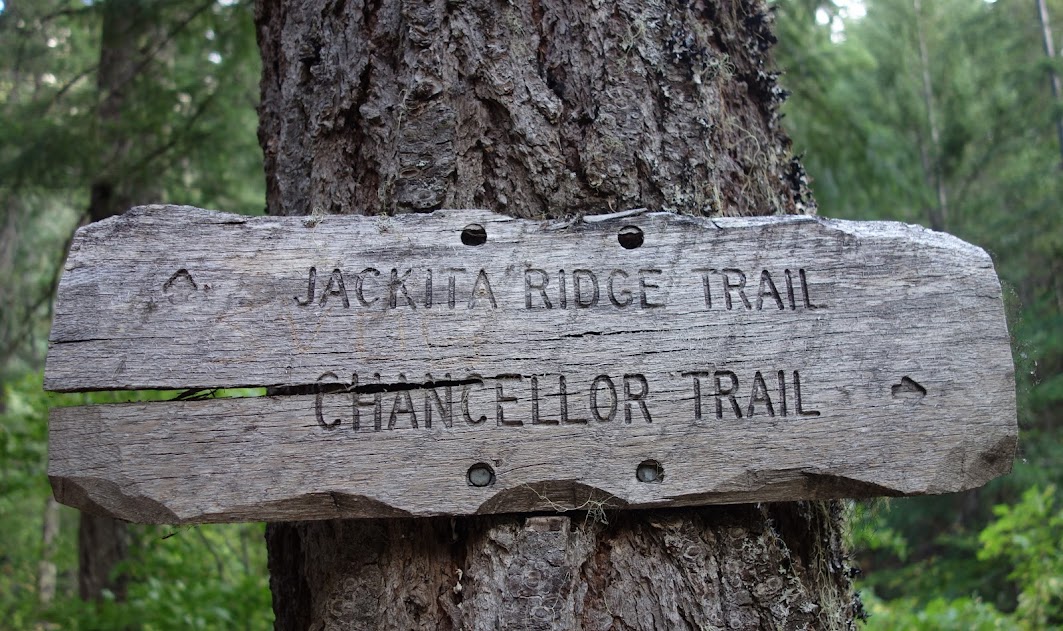
I parked at the Canyon Creek Trailhead (aka Granite Creek) and was greeted by this sign, a bit confusing to say the least. I find I’m heading toward Jackita Ridge on Trail 738 (listed incorrectly as 736 on the above map). The Chancellor trail is not listed on neither the National Geographic nor North Cascades maps I’m using. I’m hiking the loop counterclockwise (I’ll provide pros and cons to trip direction in a later post).
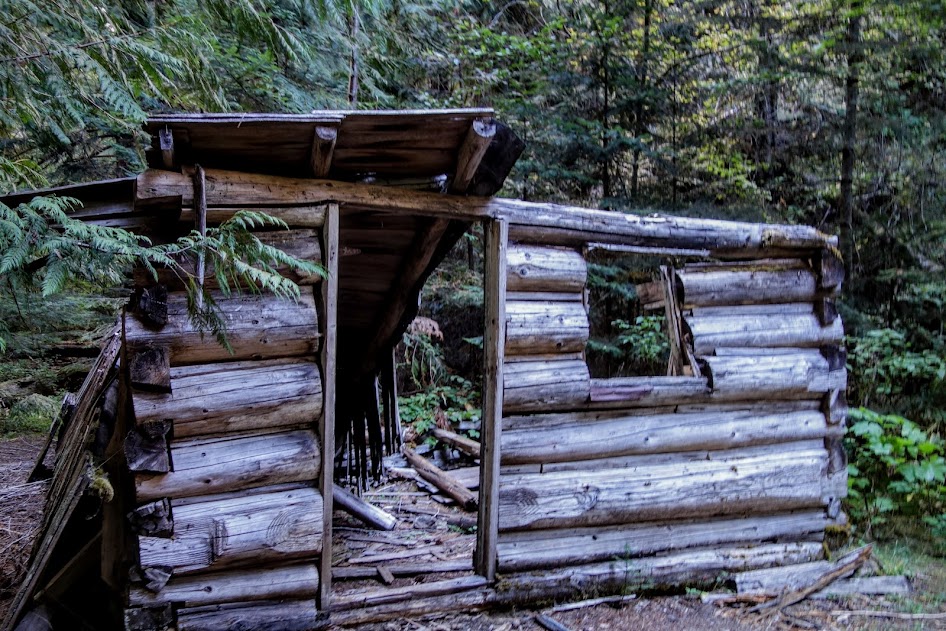
An old cabin, maybe old ranger station, provides fuel for wonderment. 
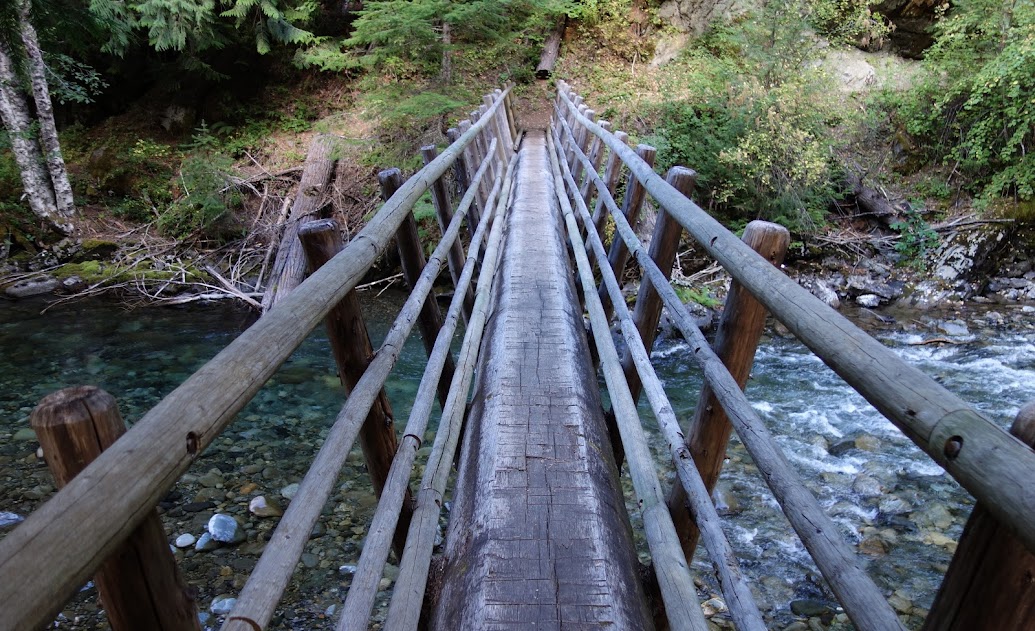
It’s always nice to skip early trip wet feet and creek fords. 
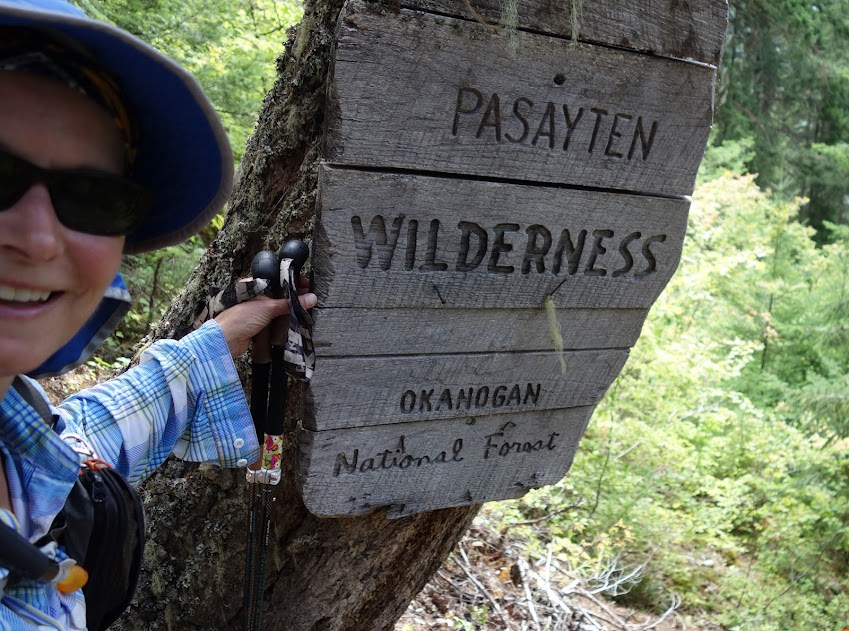
This trip crosses several boundaries including the Pasayten Wilderness, North Cascades National Park and Ross Lake National Recreation Area. It also includes sections of the Pacific Northwest Trail (PNT).
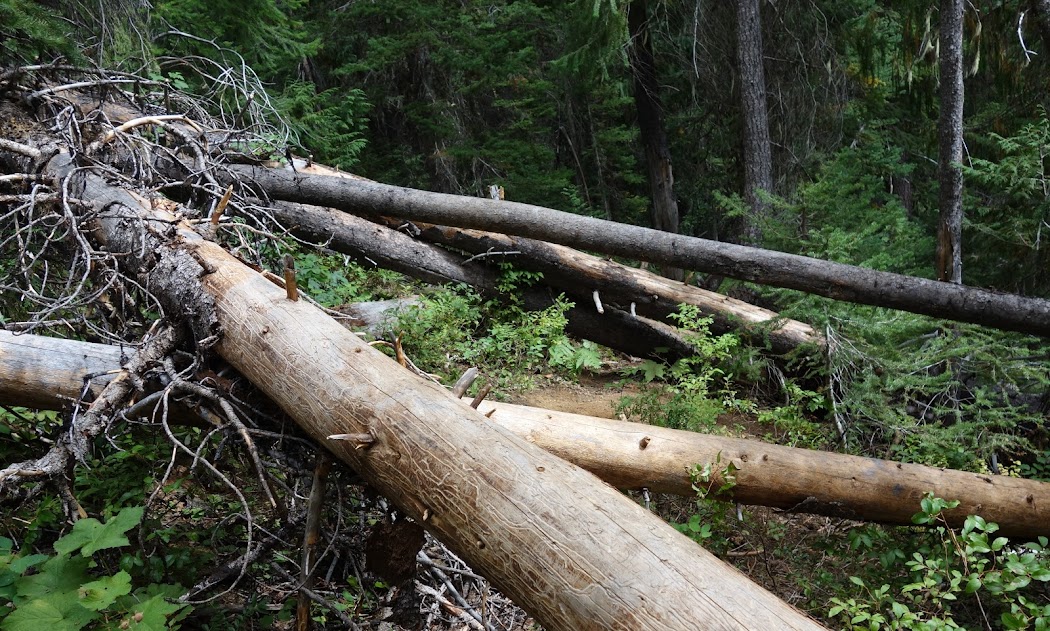
The trail was in fairly good shape with only a few sections of down trees and erosion. While the trail climbs over 3,000′ in about 4 miles, it had plenty of switchbacks, shade and water to make for a pleasant hike. 
Hiking through the forest, views were mostly limited, but occasionally, you’d be offered something like this.Part of the adventure is exploring side trails.
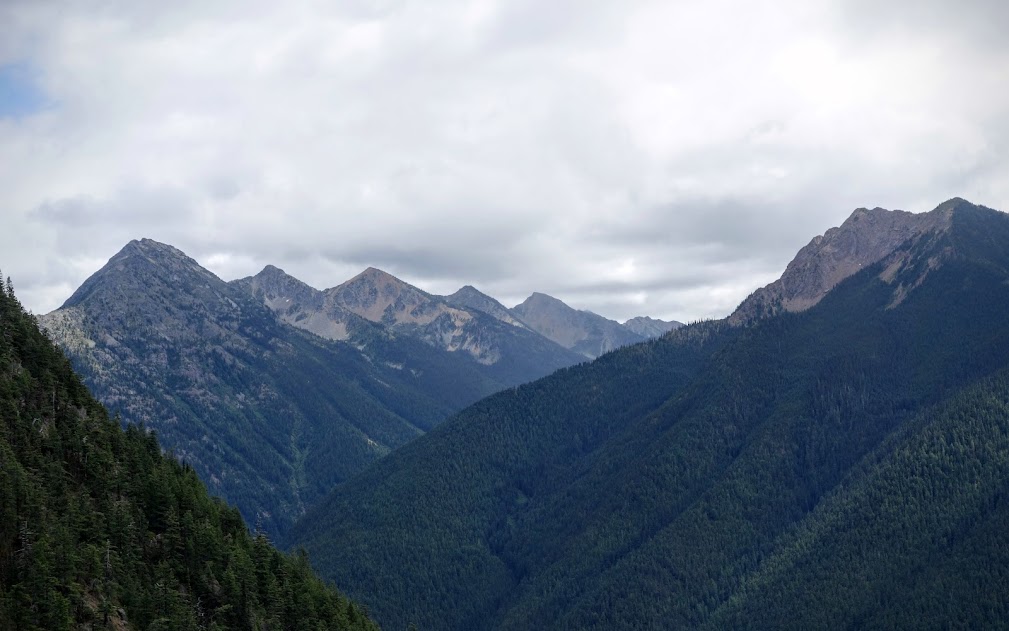
Who doesn’t like views like these? 
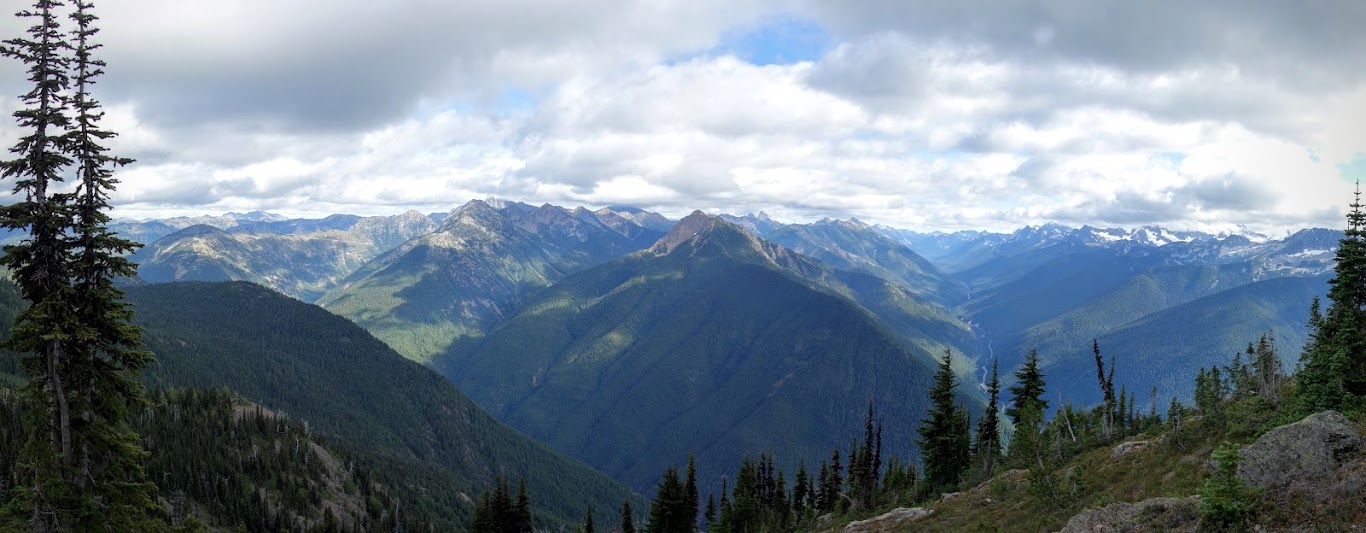
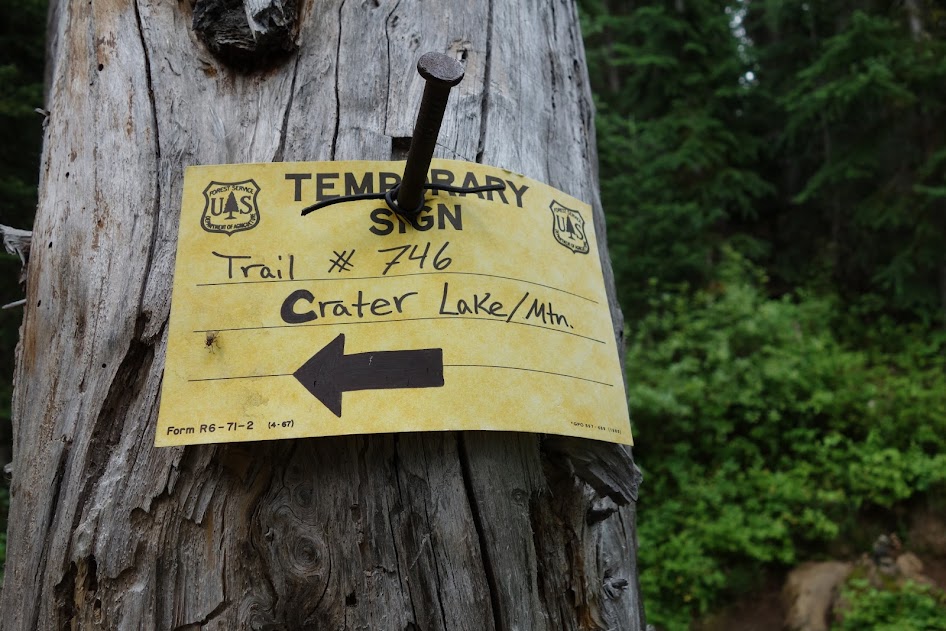
There are two summits on Crater Mountain, both which previously hosted lookouts. According to my guidebook, the slightly shorter one (7,054) could be accessed by a 2-mile trail, while the main summit at 8,128 requires climbers skills about 1/2 mile from the top. My goal was the secondary peak. 
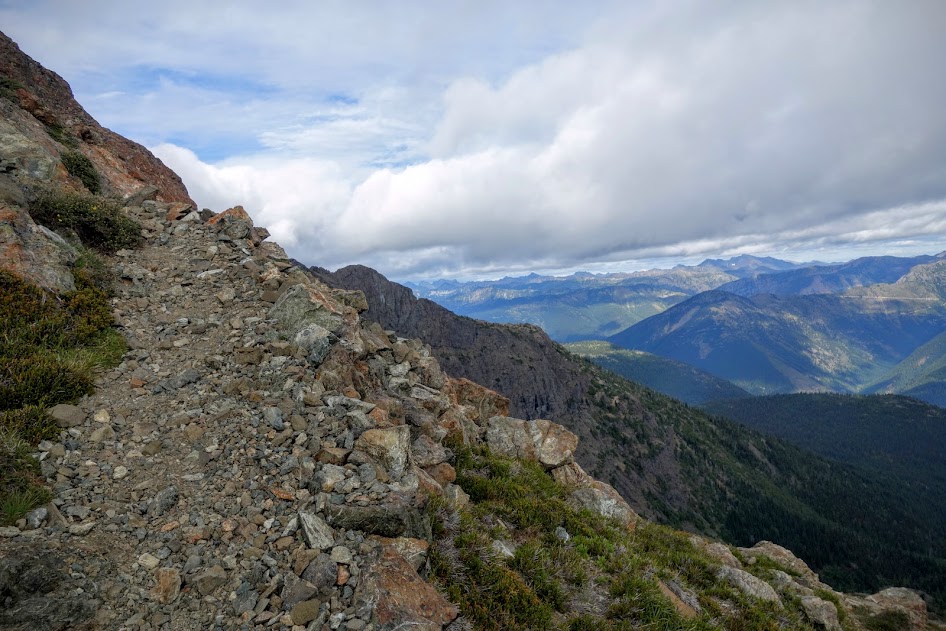
I’d started up Crater Mountain around 4pm after setting up camp near Crater Lake (a tiny shallow pond at 5,800′). I knew I’d need to manage my time and as always take extra precautions as a solo hiker. One of my safety measures is to send out a location from my InReach whenever I veer from my intended path. 
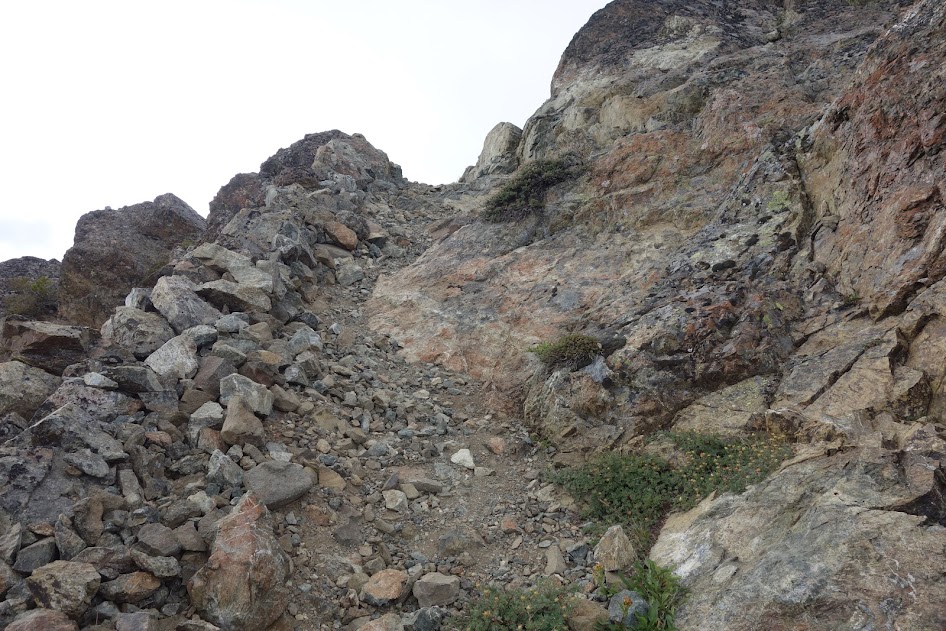
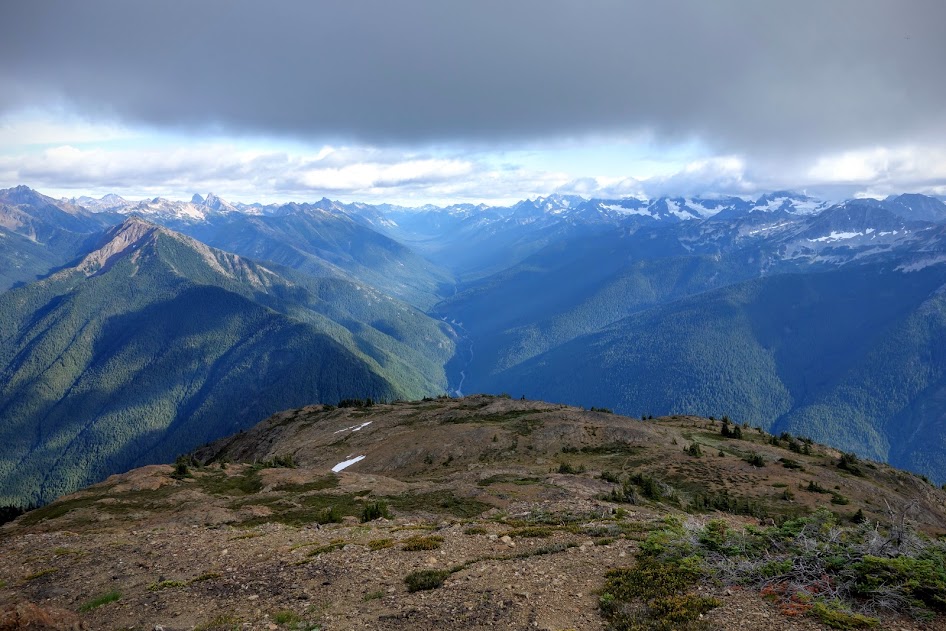
Hello Big Crater Mountain (you don’t look so big from this perspective).Hello views 

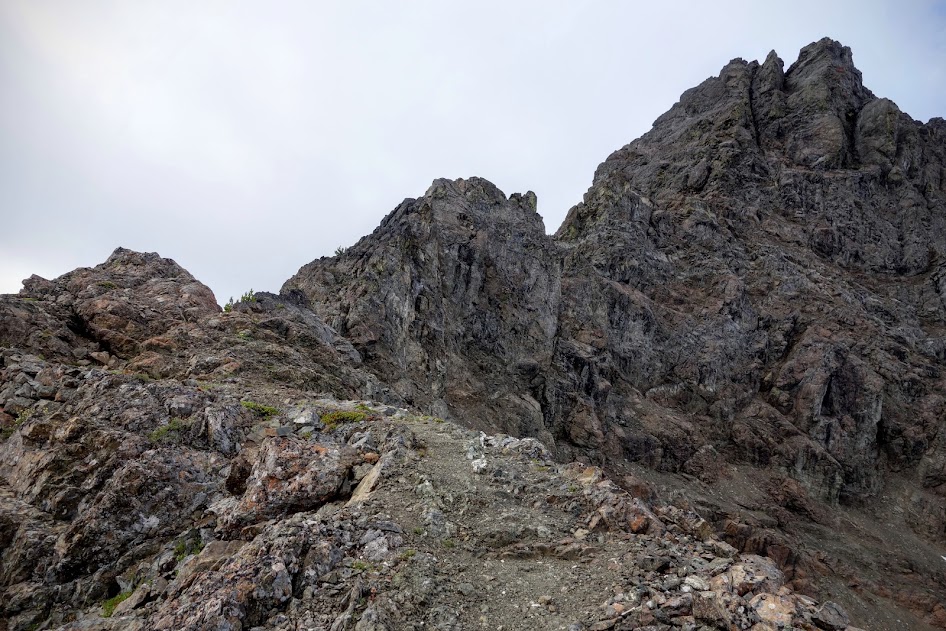
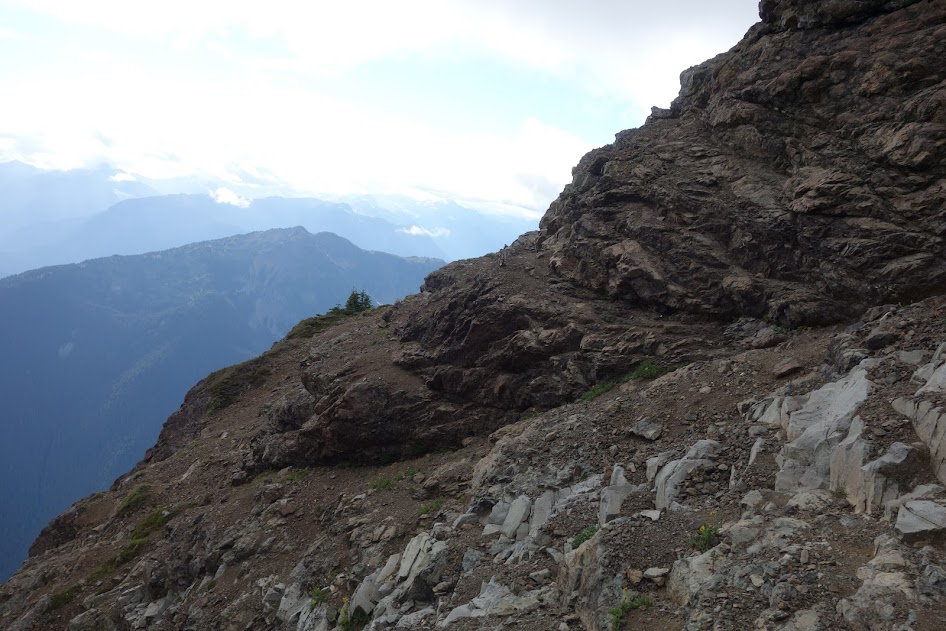
When I reached this sketch section, it was the turnaround point for me. If I had more time, I may have tried a bit of rock climbing, but with daylight my enemy, seeing Jerry Glacier and Jack Mountain would have to wait another day. 
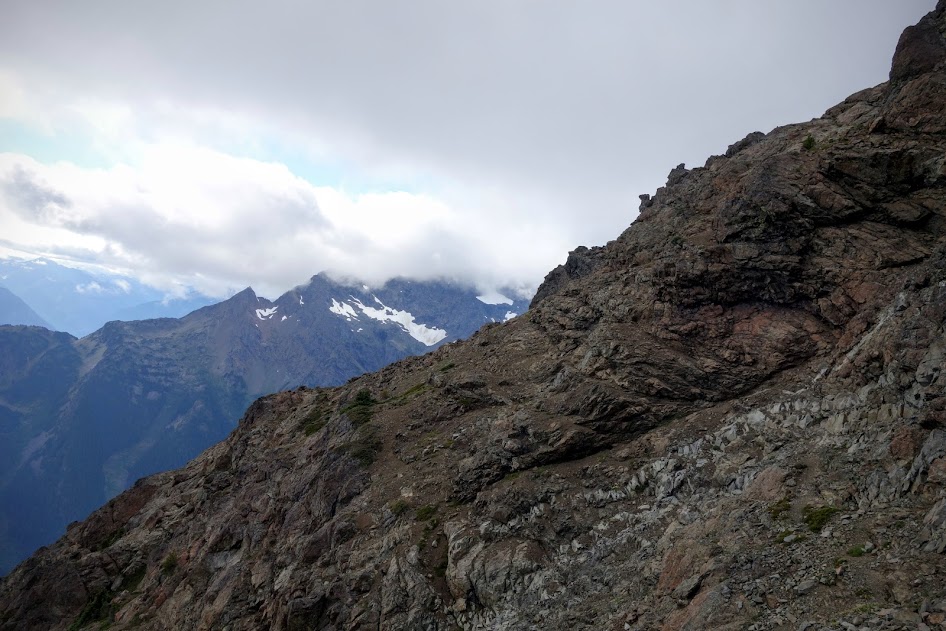
This was the last stretch before it became too much for me. 
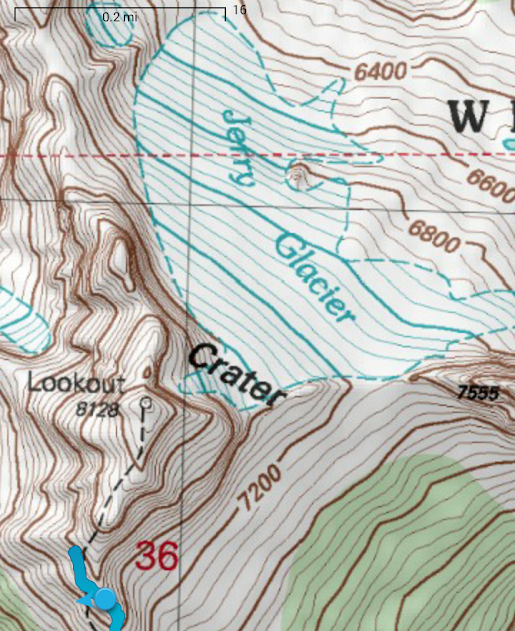
The blue line at the bottom is my track and you can see how close I got to the lookout site. 
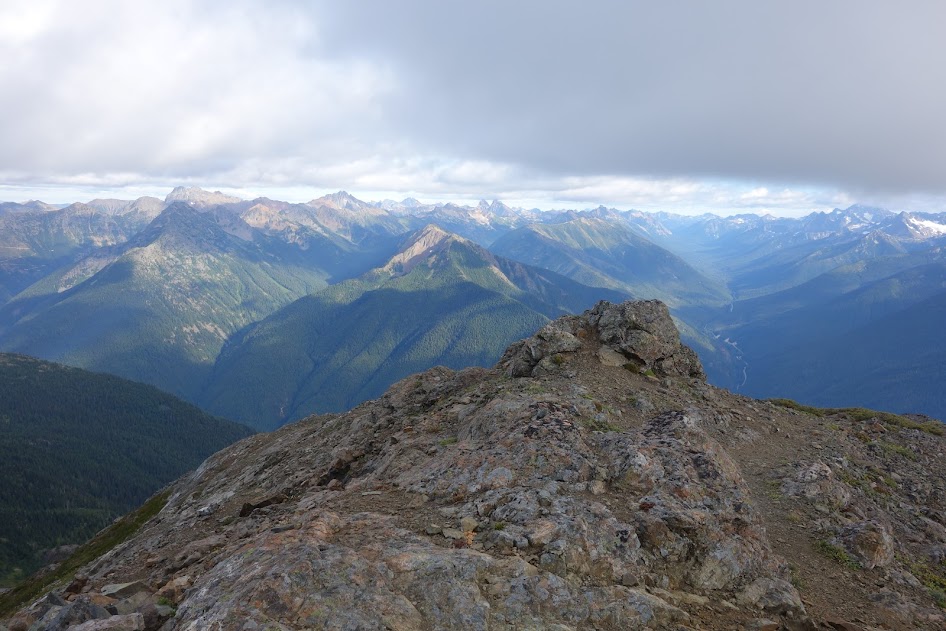
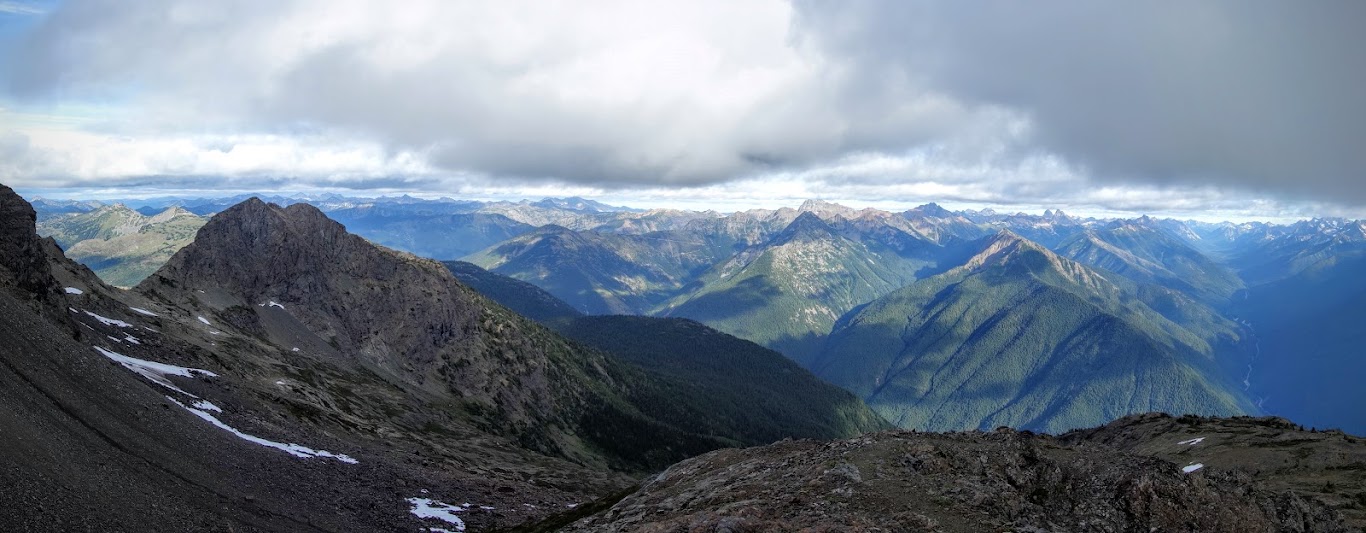
With these views, I was happy I’d at least tried. 
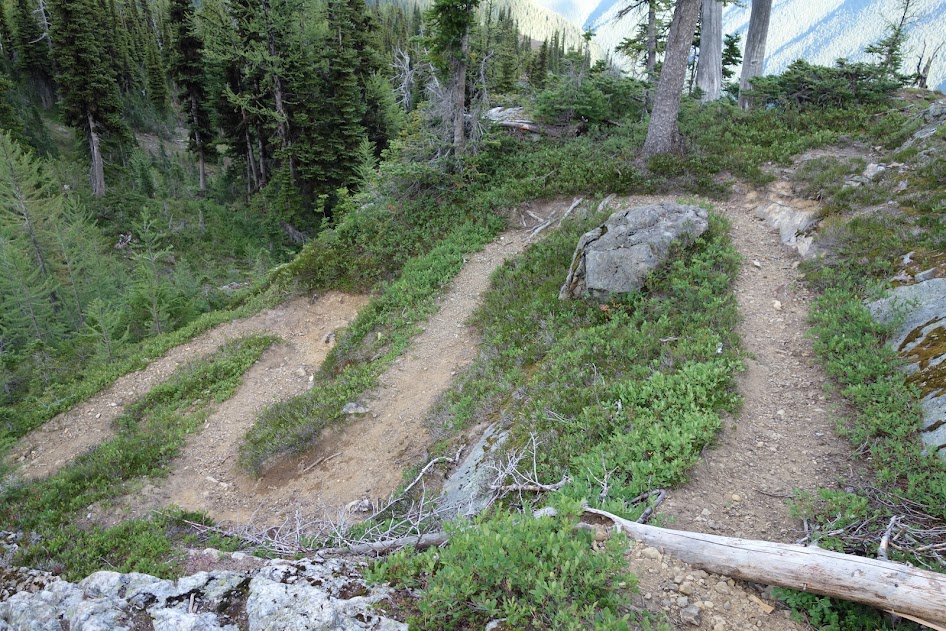
This was a fun section of the Crater Peak trail. 
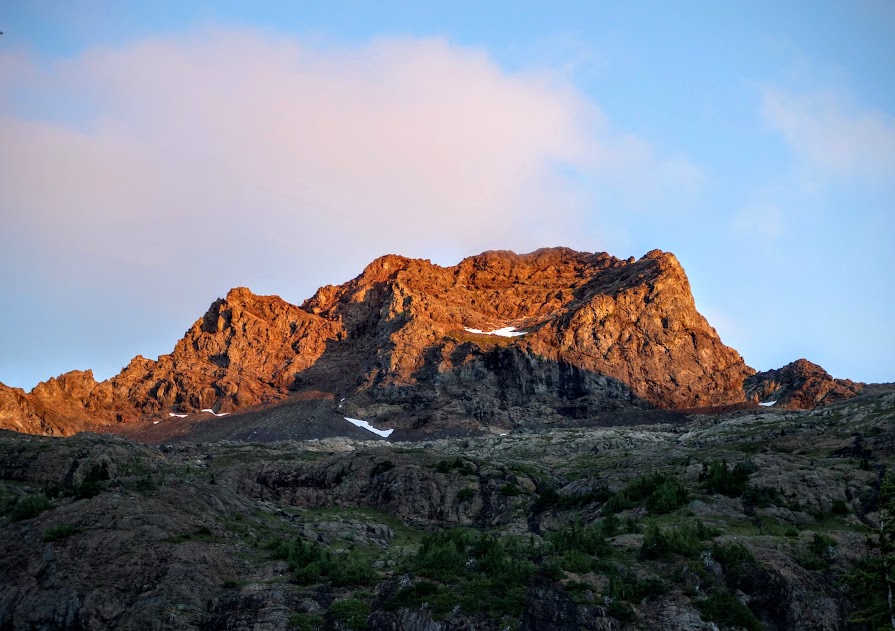
From my tent, I had a view of Crater Mountain. 
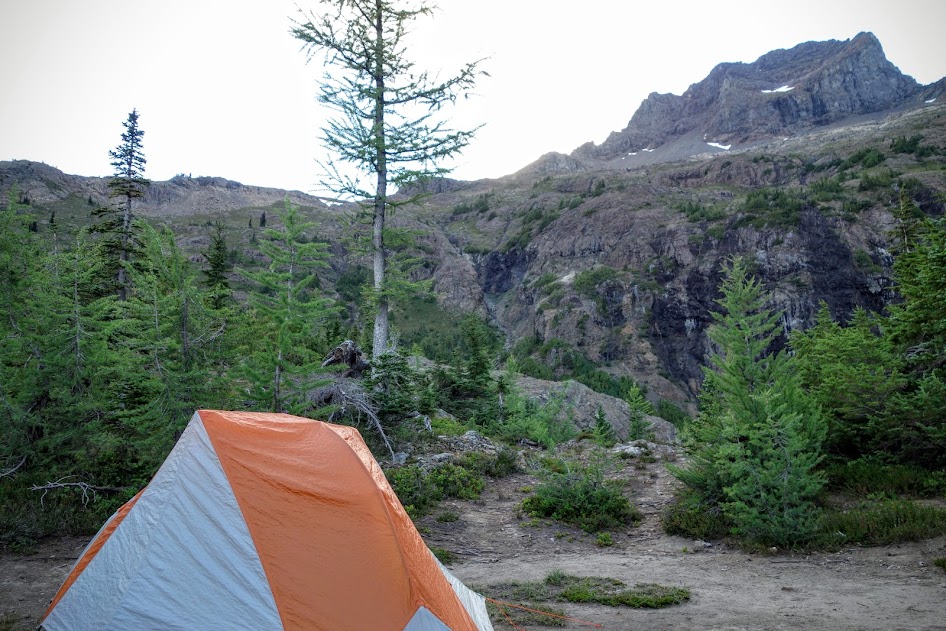
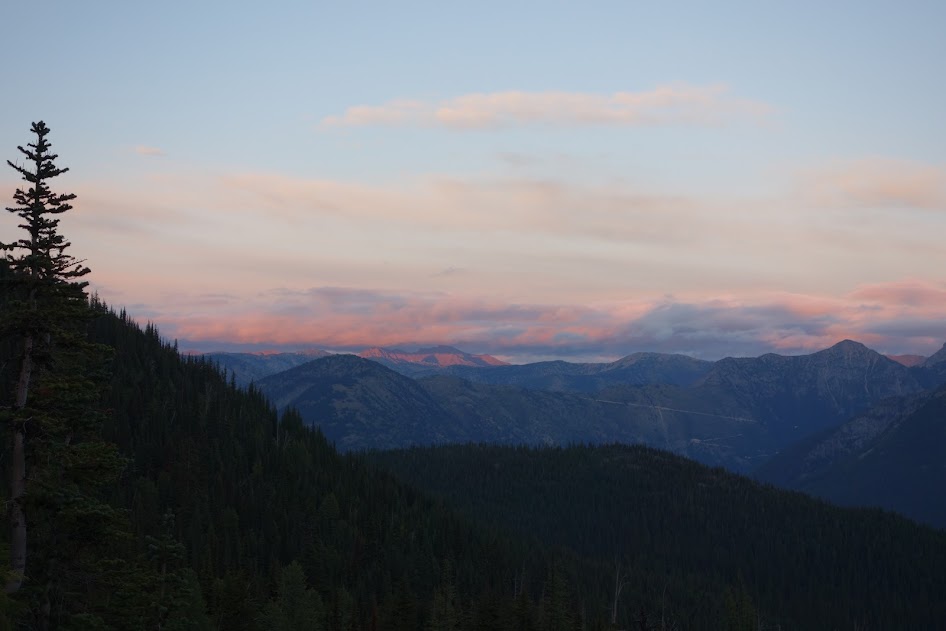
I love campsites where I have views, and can enjoy sunsets and sunrises. This offered all three!
to be continued . . .

Trip Details
  • Dates Hiked: August 22-26, 2016
  • Mileage: Approximately 50 miles
  • Elevation Gain/Loss: Approximately 16,000′
  • Trail Conditions:
    • Day 1 – B+, only a few down trees and eroded trail
    • Day 2 – C, scree field and steep eroded overgrown trail near North Fork Devils Creek
    • Day 3 – A-, better signage needed for Deception Pass, Devils Pass shelter and Devils Pass spring
    • Day 4 – C, steep and dusty descending from Dry Creek Pass
    • Day 5 – B, not too many down trees nor overgrowth but could use some love
  • Solitude Factor:
    • Day 1 – two groups of 2 people each hiking out (one of the groups was day hikers)
    • Day 2 – two tents at the Crater Mountain junction, one solo hiker hiking loop in opposite direction
    • Day 3 – two at Devils Dome, two at Dry Creek Pass
    • Day 4 – too many to count, probably at least 20 going the opposite direction up to Dry Creek Pass
    • Day 5 – didn’t see anyone
  • Bugs:
    • Day 1 – no skeeters or biting flies
    • Day 2 – bees taking care of the flowers in the subalpine areas
    • Day 3 – zip except bees minding their own business
    • Day 4 – another bug-free day
    • Day 5 – zip
  • Precipitation:
    • Day 1 – a few light showers
    • Day 2 – zip, just some nice clouds
    • Day 3 – zip
    • Day 4 – another shower-free day
    • Day 5 – zip
  • Temperature:
    • Day 1 – 36 overnight low
    • Day 2 – 40 overnight low
    • Day 3 – 40 overnight low
    • Day 4 – 59 overnight low

Loop Direction:

The positives of hiking counterclockwise are the initial climb is much more friendly with better switchbacks, trail is shaded, water is plentiful, and camping is available sooner. The positives of hiking clockwise is using the ferry to cut-off 15 miles of trail, or getting the permitted section out of the way first giving you freedom of campsites the remainder of the trip.

Links